

A disappointing aftermath?
Saint-Pierre falls from grace
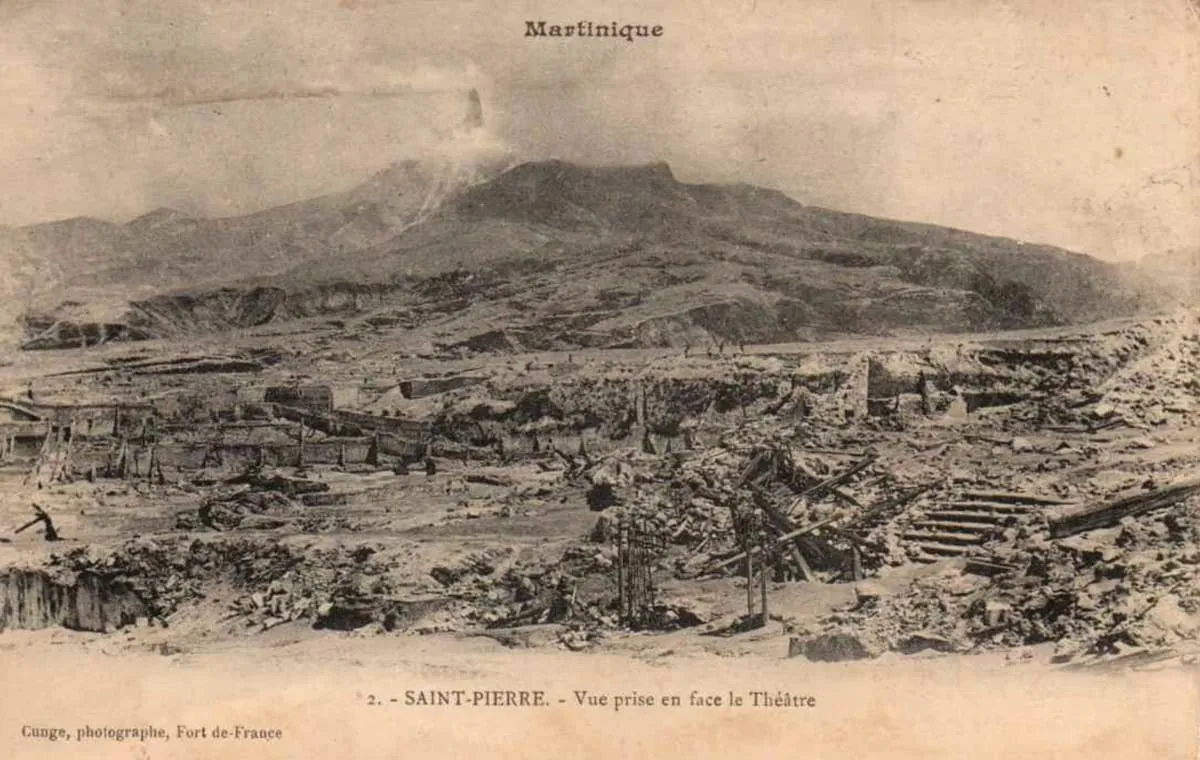
One could say that on the morning of May 9, 1902, Saint-Pierre woke up groggy, but the human and material disaster was such that one could say that overnight the city had become a desert, a field of ruins like a city destroyed after a bombing raid. The harbor of Saint-Pierre was littered with wrecks and the keels of overturned ships. This was all that remained of the 30 to 40 ships that had been there.
Along the quays, stretching for 200 meters, the supplies of construction timber were on fire. On the heights of the city and as far as Fonds-Coré, partial fires were reported. The buildings that had once been the pride of the city were partially or totally destroyed. There was no sign of life. It was not until two days later that the only two survivors in the city were found.
In a report written by the vicar general, administrator of the diocese in the absence of the bishop, who had been sent to Monseigneur de Cormont, former bishop of Saint-Pierre, who was in Paris, he describes his feelings by stating:
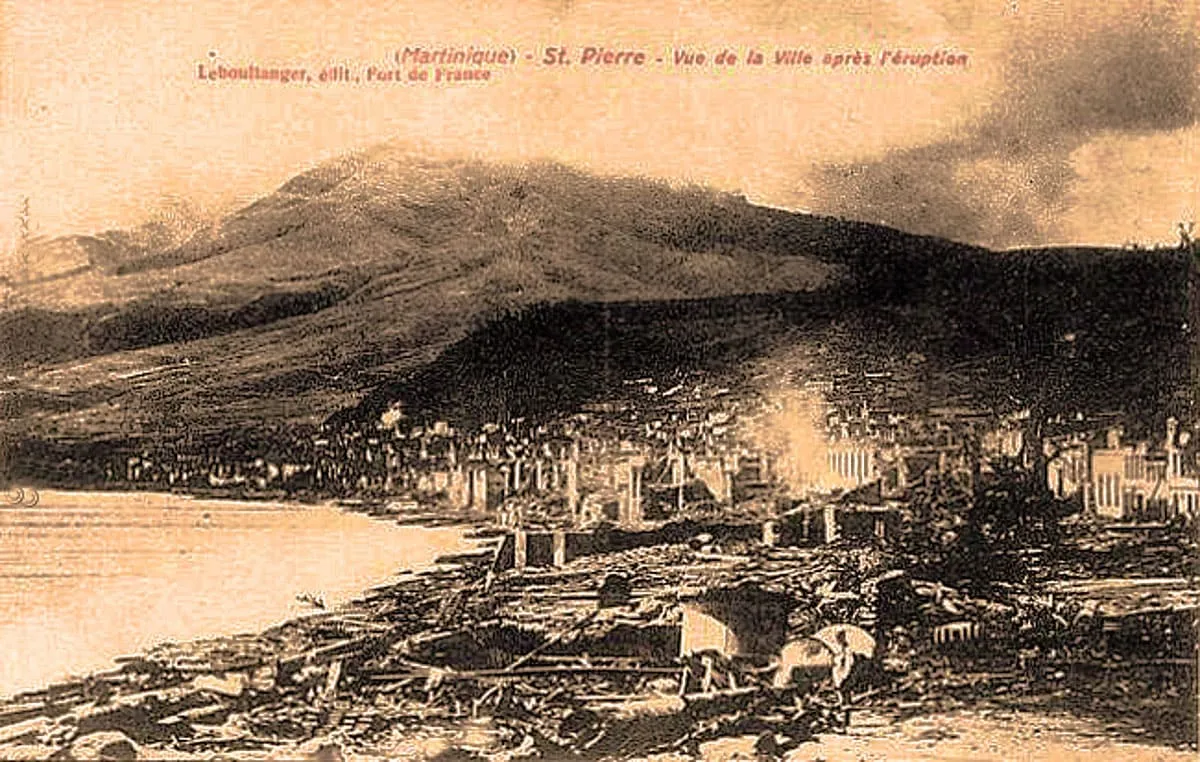
Saint-Pierre, this city, still alive in the morning, is no more! There it lies before us, consumed, lying in its shroud of smoke and ashes, gloomy and silent like a necropolis. Our eyes search for fleeing inhabitants or those returning to collect their dead! But nothing! Not a single living soul appears in this desert of desolation, surrounded by frightening solitude!
In the background, the mountain and its slopes, once so green, seem to be covered, when they are uncovered, with a thick blanket of snow, like a landscape in the Alps; and, through the cloud of ash and smoke spread across the atmosphere, a sun with a dull, pale glow, unknown in our skies, casts something sinister over this scene, giving the impression of a view from beyond the grave. With what emotion I raise my hand to these 40,000 lives suddenly cut short, lying buried in this terrible tomb!
Dear and unfortunate victims, elderly people, women, children, young girls, who have fallen so tragically, we mourn you, we, the unhappy survivors of this desolation, while you, purified by the special virtue and exceptional merits of the horrible sacrifice, on this day of your God's triumph, have ascended to him to receive from his hand the crown of glory! It is in this hope that we will find the strength to survive you.
An agent from the French Telegraph Cable Company also described the scene before him:
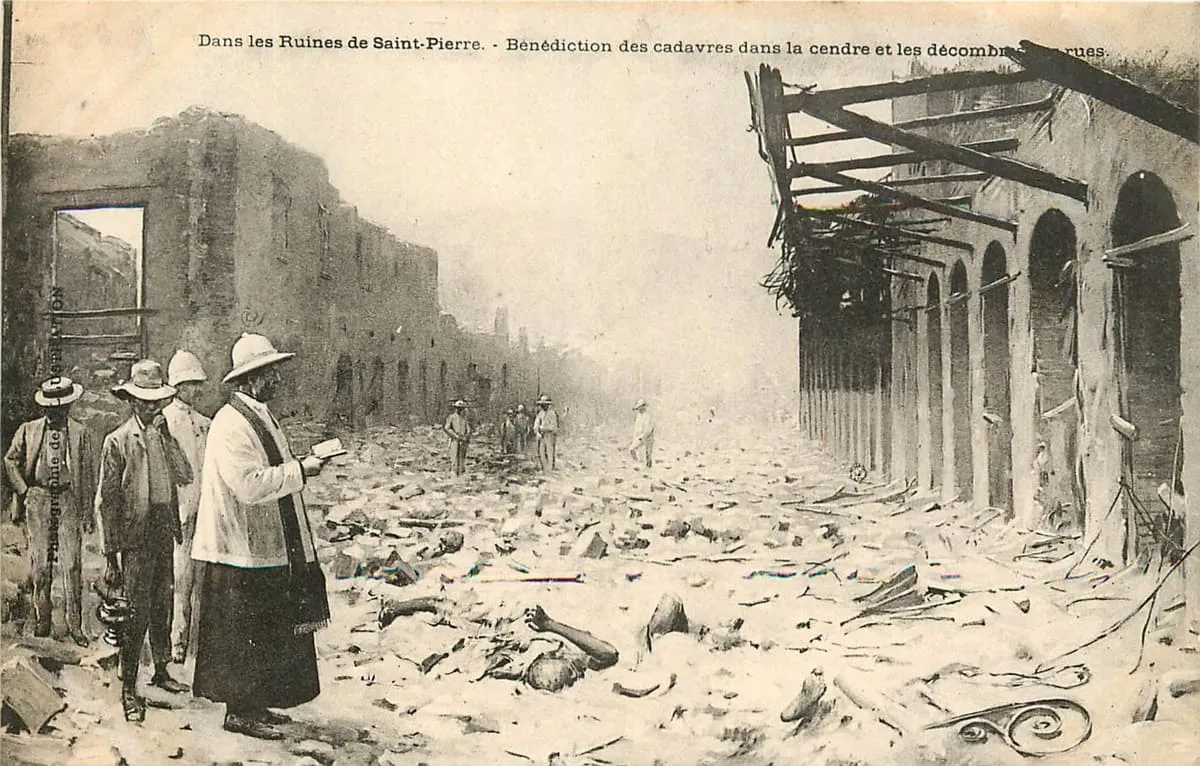
The anchorage is surrounded by smoking shipwrecks. A cloud of ash completely obscures the view of the mountain. Two priests are conducting the funeral service, standing on the ruins opposite the customs house, next to the flames still leaping from the houses by the sea.
We visit the military hospital, the cable office, the bank, and the Esnotz battery in succession. The streets are littered with charred, naked, unrecognizable corpses. The smell of burnt flesh chokes us. Only one person is still wearing clothes: a hospital orderly who must have thrown himself into a pool, and when the water dried up, his body was charred with his clothes still on.
A few walls remain standing. The roofs, partitions, and objects inside the buildings appear to have been violently thrown outside. There is no sign of life, not even a fly on the rotting flesh: the realm of death, in all its desolation.
The soldiers sent to rescue any survivors had nothing to do. They returned to Carbet filled with emotion and bitterness at the immense disaster they witnessed in Saint-Pierre. In Carbet, too, the damage was extensive. In some houses, there were around fifteen bodies, badly burned dying people, and young people with swollen skin falling apart.
The devastation is intense and everywhere. Parents mourn their children, children mourn their parents, women mourn their husbands and vice versa. Cries of pain can be heard everywhere. The soldiers then return to Fort-de-France.
But the eruption did not end on May 8, 1902; there were several more eruptions between May 8 and August 30, some more violent than others. There were even around sixty eruptions by the end of 1903. The cumulative thickness of the ash layers exceeded 3 meters. Rue Levassor had to be cleared. On the political side, Louis Mouttet, then Governor of Martinique, was among the victims of the eruption, along with his wife. He was heavily criticized after the fact for his handling of the disaster.
Jean Baptiste Philémon Lemaire succeeded him. However, at the beginning of August, the authorities deemed the city safe and called on the former inhabitants of Saint-Pierre to return to their old homes. Some of those who had fled and survived the eruption of May 8, returning to live in Saint-Pierre, fell victim to new pyroclastic flows.
On May 20, an eruption more violent than that of 1902 struck the entire island. Ash fell across the whole island. Buildings that had been partially destroyed were completely destroyed. There were a few casualties. Looting took place in the streets of the city. The ashes covering the corpses prevented their decomposition. On May 26, June 6, and July 9, there were similar clouds.
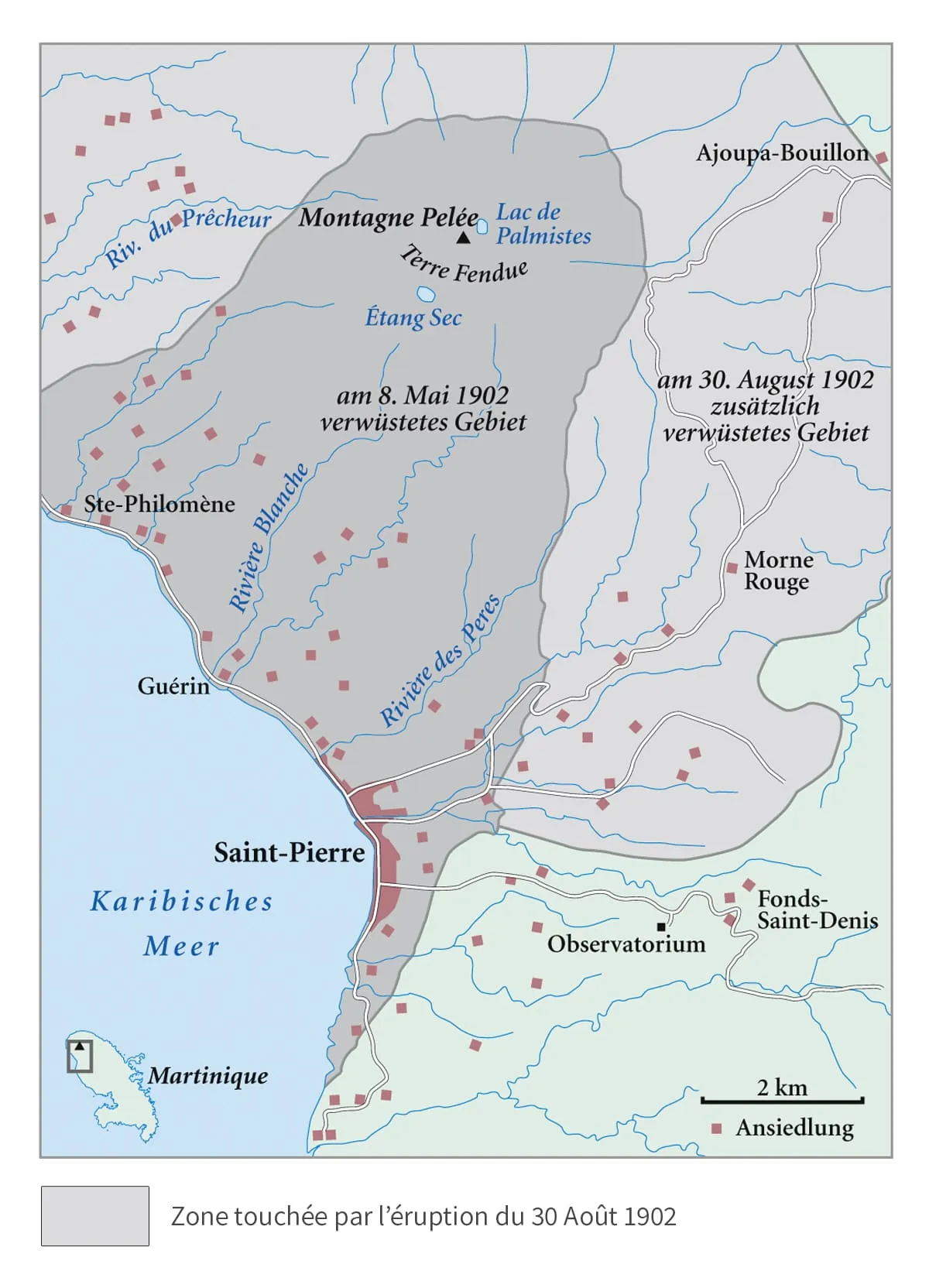
On August 30, the cloud spread much further south and east, causing even greater damage. An area of nearly 60 km² was destroyed. Although the explosion was less powerful and less intense (over 120°C), its incandescent elements nevertheless set fire to the vegetation and homes in the city.
Nearly 1,400 new victims (800 in Morne-Rouge, 250 in Ajoupa-Bouillon, 25 in Basse-Pointe, and 10 in Morne Capot) were reported. From November 1902 to September 1903, there were successive collapses at the start of the clouds. After 1905 and until 1910, a few fumaroles were visible, and a slow uplift (elevation of the rocks that make up the mountains) of the dome appeared. However, the extinction was apparent.
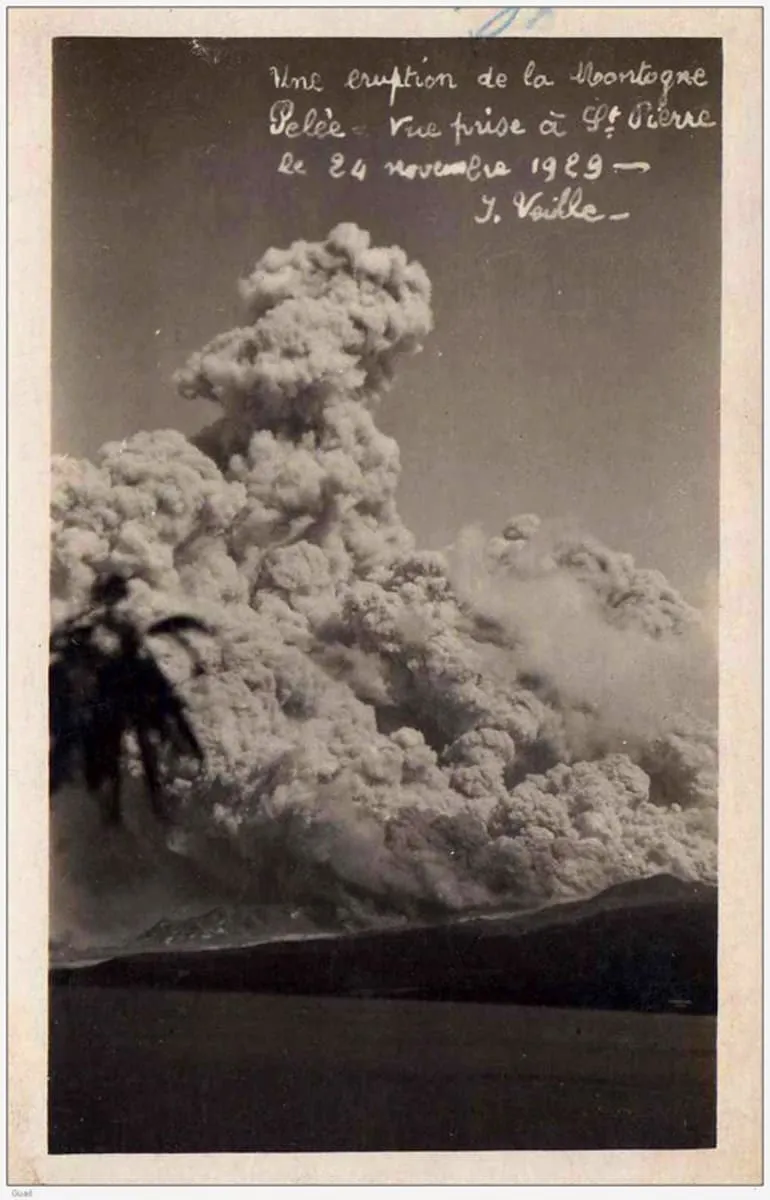
A few years later, another eruption occurred between 1929 and 1932, but caused only material damage.