Habitation du Simon

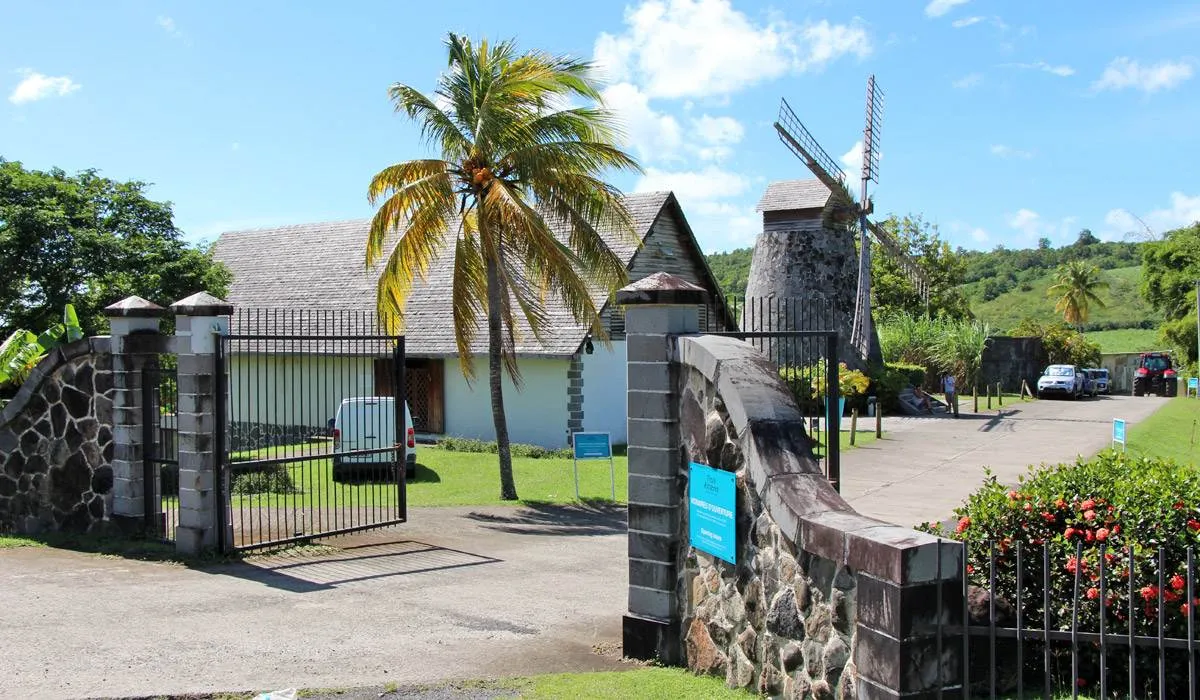
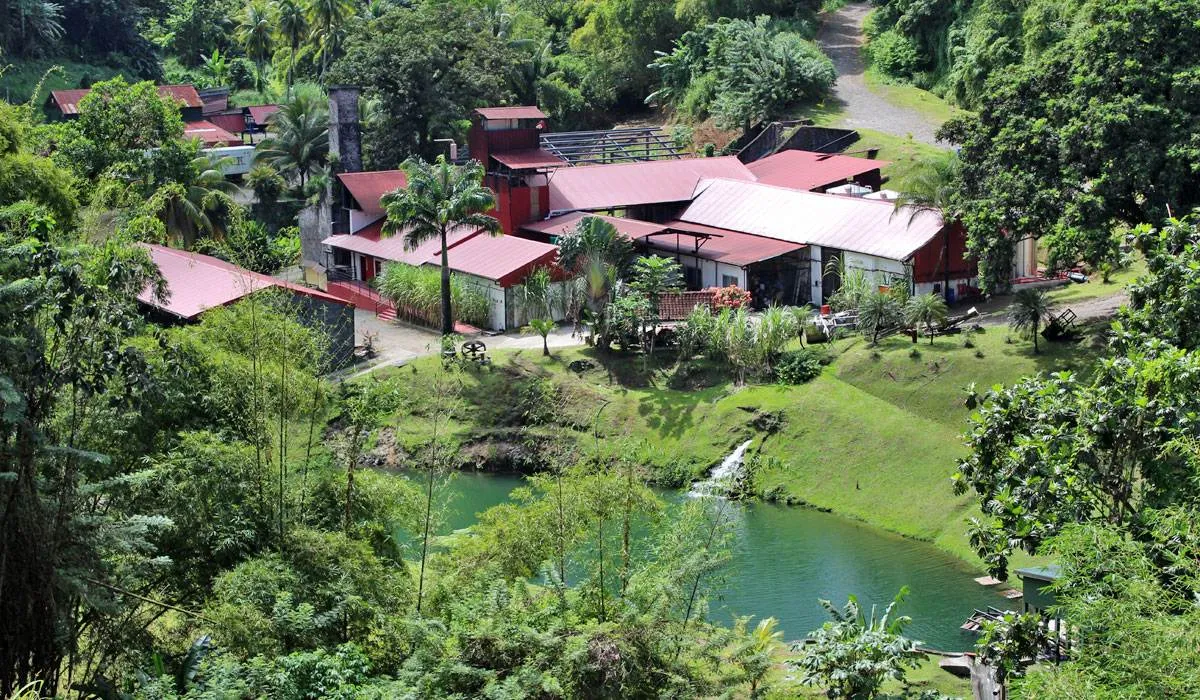
The Domaine l'Habitation du Simon is located between Le François and Le Vauclin in the heart of a sugar cane plantation. It is an 18th-century building that still lives to the rhythm of harvests and rum production.

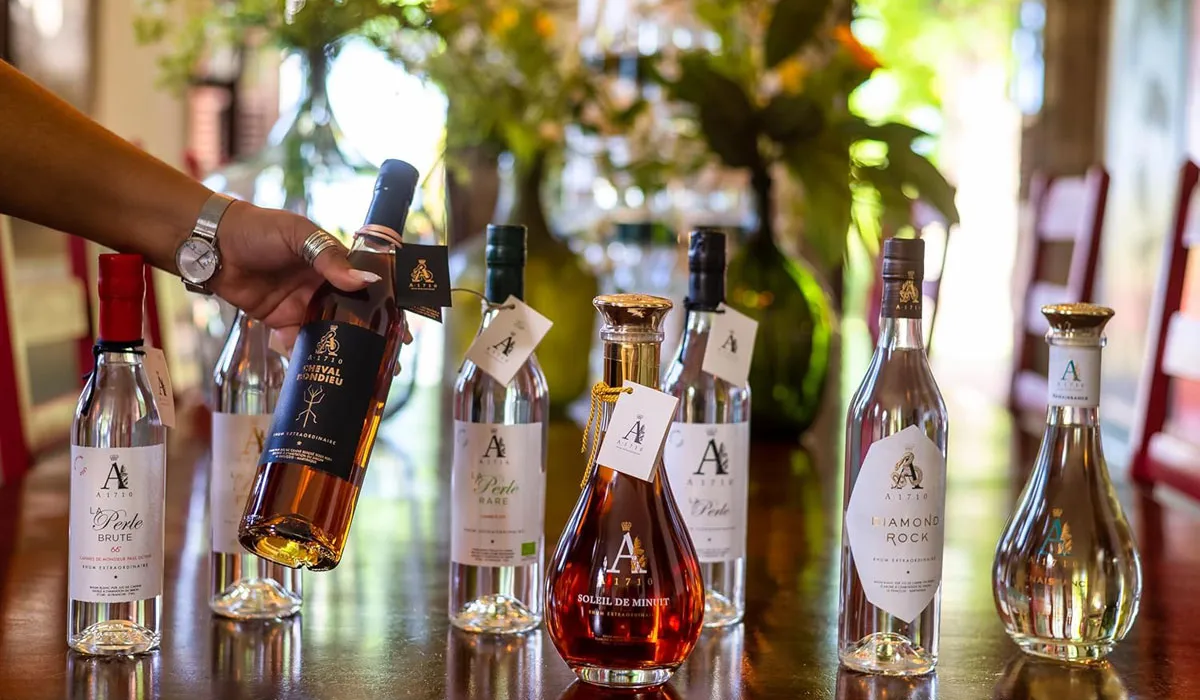
A1710 rum is produced on site. You might think that 1710 is the year this rum was born, but that's not the case. It's the latest brand to arrive in Martinique, and its rum was only launched in 2016!

In 2006, Yves Assier de Pompignan embarked on an ambitious project: to create a new rum distillery imbued with the history and richness of the Caribbean terroir. With the help of a determined and passionate team, he took over the Habitation du Simon to set up his rum brand.

In 2010, the decision was made to launch the project, and work began on selecting the fine aged rums to be used in the blends. An aging cellar previously used for cognac production was introduced, and a laboratory was set up at the Habitation. The first selections of rums, then aged between 6 and 11 years, were put back into French oak barrels of 320 liters for further aging.

At the same time, with the aim of setting up an innovative, high-quality, traditional distillery, they opted for a Charentais still made entirely of copper, complete with a 7-plate column and temperature-controlled fermentation vats allowing for long fermentation periods in order to obtain rums with strong aromatic potential.

After several years of setting everything up and completing the administrative procedures, De Pompignan and his team obtained authorization to open their distillery for the production of agricultural rums, the last rum distillery founded in Martinique.

Work began on the rum distillery, which was set up in an old 18th-century purgerie (a type of distillery) in the heart of the estate. The house was also refurbished to accommodate visits and tastings.

The new A1710 distillery was inaugurated in 2016 at Habitation du Simon.

In 2023, a second still, almost identical to the first one installed in 2015, was introduced. It allows us to push even further in our quest for aromatic excellence and quality in A1710 rums. The cane wine will therefore continue its ritual of double distillation.

List of A1710 rums:

  • White rums
  • Aged rums
  • Limited editions
  • Organic rums
  • Rums aged in wood
Photo gallery
A1710 rums produced at Habitation du Simon
Habitation du Simon
Habitation du Simon
A1710 rums produced at Habitation du Simon
Habitation du Simon
Habitation du Simon

Habitation Beauséjour

Habitation Beauséjour is located at the northern tip of Martinique, in the commune of Grand-Rivière. Built in the 18th century, the estate witnessed the evolution of various crops during the period of slavery. Cacao, sugarcane, banana, and later sugarcane again were cultivated successively on its lands.

Around the main house, which dates from 1820, stand two additional buildings: the “Senator’s Pavilion,” built as the office of Amédée Knight, senator of Martinique who lived there, and another structure that served as a storage area, water house, and stable. Much farther downhill lies the “rue cases-nègres,” which was the living area for enslaved people and later for agricultural workers.

The first owner of the estate was Chambert Anthoine, known as La Rivière, originally from Agde (Hérault), according to documents from 1671. At that time, the property covered about 150 hectares. In 1680, the estate was home to the master, his wife, their two children, and 80 enslaved Africans. Until 1928, nine different owners succeeded one another, including the Knight family, whose patriarch Amédée Alexis Augustin Knight was a descendant of a Black man born in Martinique. Knight, an engineer trained at the École Centrale de Paris, became senator of Martinique in 1899.

A planter and distiller in Saint-Pierre, he acquired the land in the early 20th century, at a time when the sugar industry was in crisis and plantation bankruptcies were common. Despite this, the estate experienced remarkable prosperity under his management. Its surface area expanded from 136 to 285 hectares, and he established a distillery that produced a high‑quality rum, “H.B.S. rum,” which won a gold medal at the Colonial Exhibition in Paris in 1932.

It was also during this period, between 1900 and 1912, that the estate took the name Beauséjour. When Amédée Knight’s heirs sold the property in 1928 to the “béké” Pierre François Honoré Louis de Lucy de Fossarieu, it had grown by another 50 hectares. Sugarcane cultivation and rum production continued, while cacao declined in favor of secondary crops such as corn, beans, and sweet potato. After the Second World War, banana cultivation took over, and rum production ceased in 1958.

For several years, banana was the estate’s main crop, until sugarcane once again became predominant in more recent times.

The estate was listed in the French Register of Historic Monuments in September 1996. It now produces a high‑quality rum that visitors can taste during the tour.

To reach the estate from Fort‑de‑France, follow the N3 to Ajoupa‑Bouillon, then take the N1 toward Basse‑Pointe, Macouba, and Grand‑Rivière. Before entering the village, turn left.

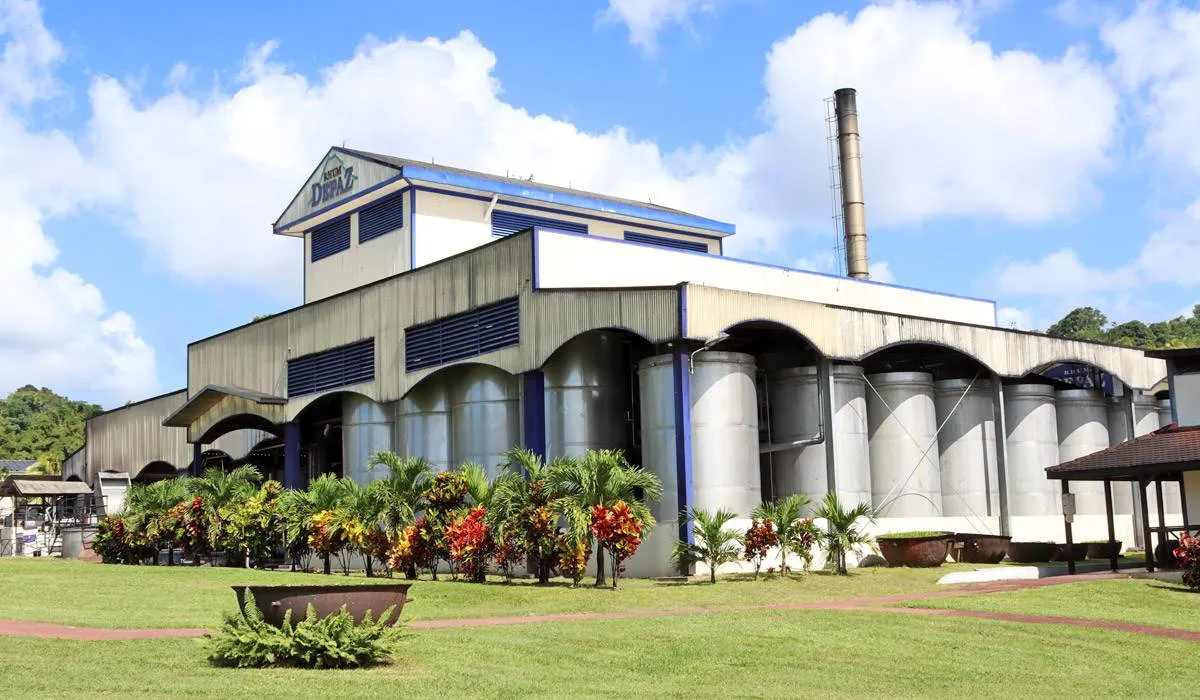
Depaz Distillery

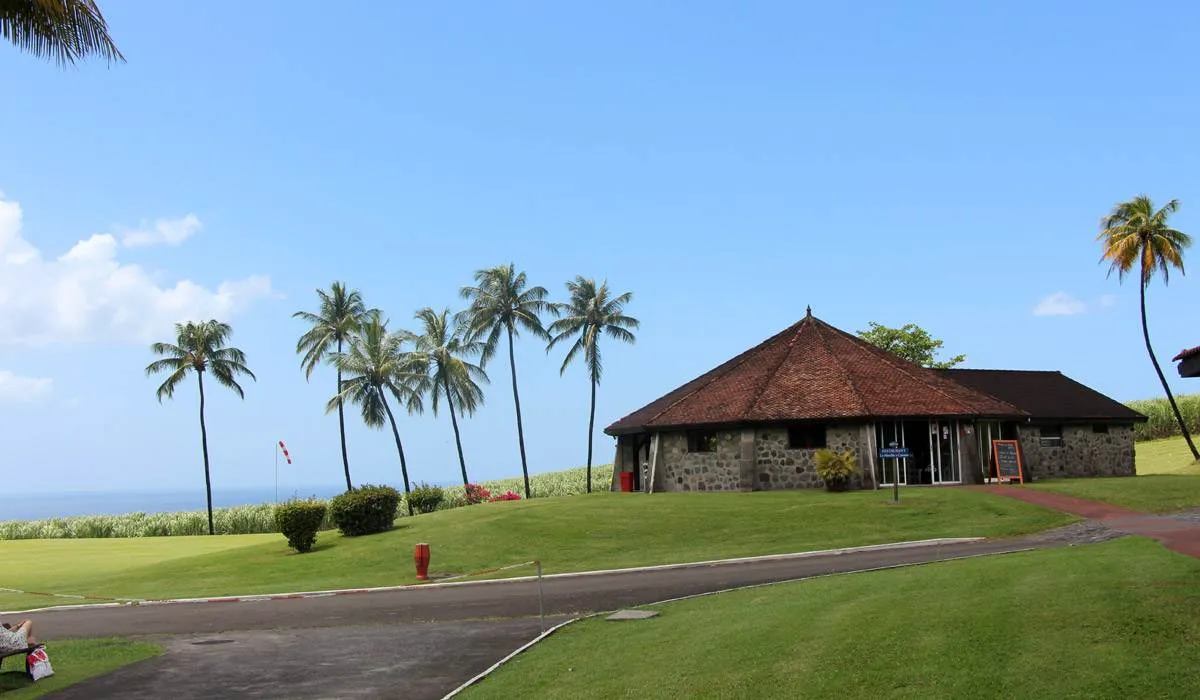
On May 8, 1902, the Depaz family disappeared during the eruption of Mount Pelée, which also destroyed the town of Saint-Pierre. The only member of the Depaz family to escape the tragedy was Victor Depaz, then a young student living in Bordeaux, where he was studying. Once he had completed his studies, Victor Depaz, now an orphan and penniless, returned to Saint-Pierre to the Habitation Périnelle, where he had been born in 1886.

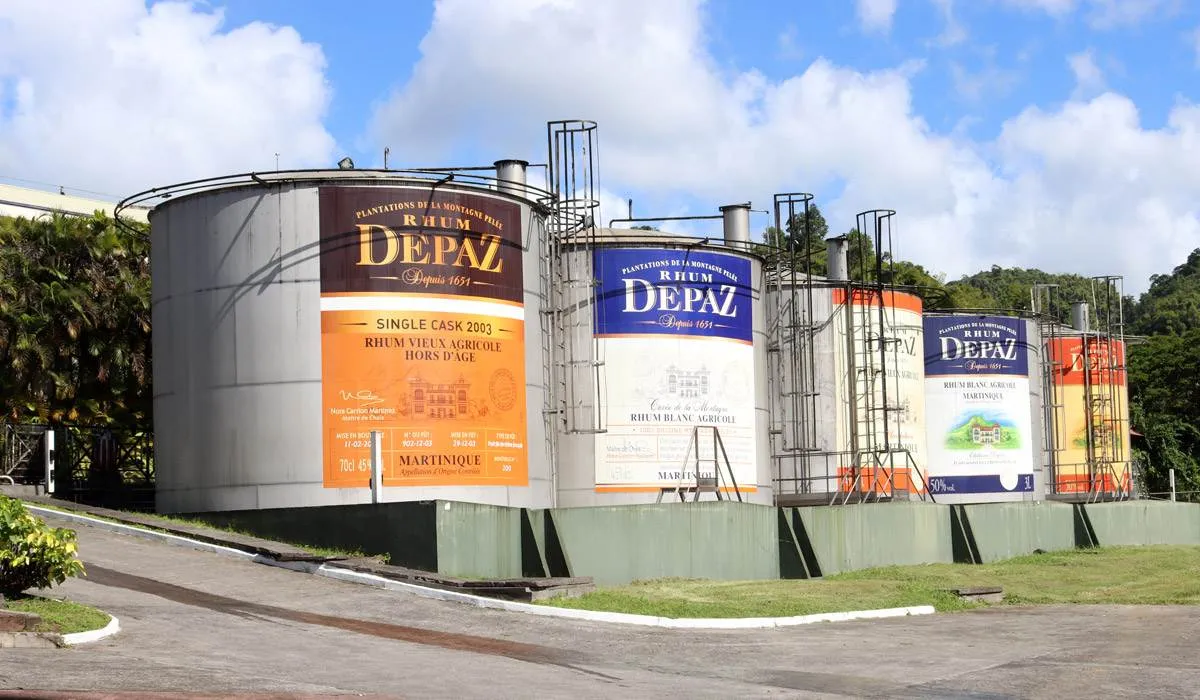
On the symbolic date of May 8, 1917, 15 years after the eruption, Victor Depaz bought the 521 hectares of fallow land at Habitation Pécou from the d'Aurigny family and started up the distillery he had built to crush the cane he was planting on the slopes of Mount Pelée.

He began construction of “Château Depaz,” a replica of Habitation Périnelle, where he had spent his childhood. He moved there with his wife and eight children in 1923. He would have eleven children in total.

Depaz rum won its first medal at the Marseille exhibition in 1922, then again in 1927 and 1931.

The reputation for quality of Depaz rum grew year after year under the leadership of Victor's sons, first Henri Depaz, then, from 1986, his twin brother André.

In 1989, André Depaz joined forces with the Bordeaux-based family group Bardinet, a long-standing customer of the Depaz Distillery, and continued the work begun by Victor Depaz, first with Bardinet and later with the new owner of La Martiniquaise.

Photo gallery
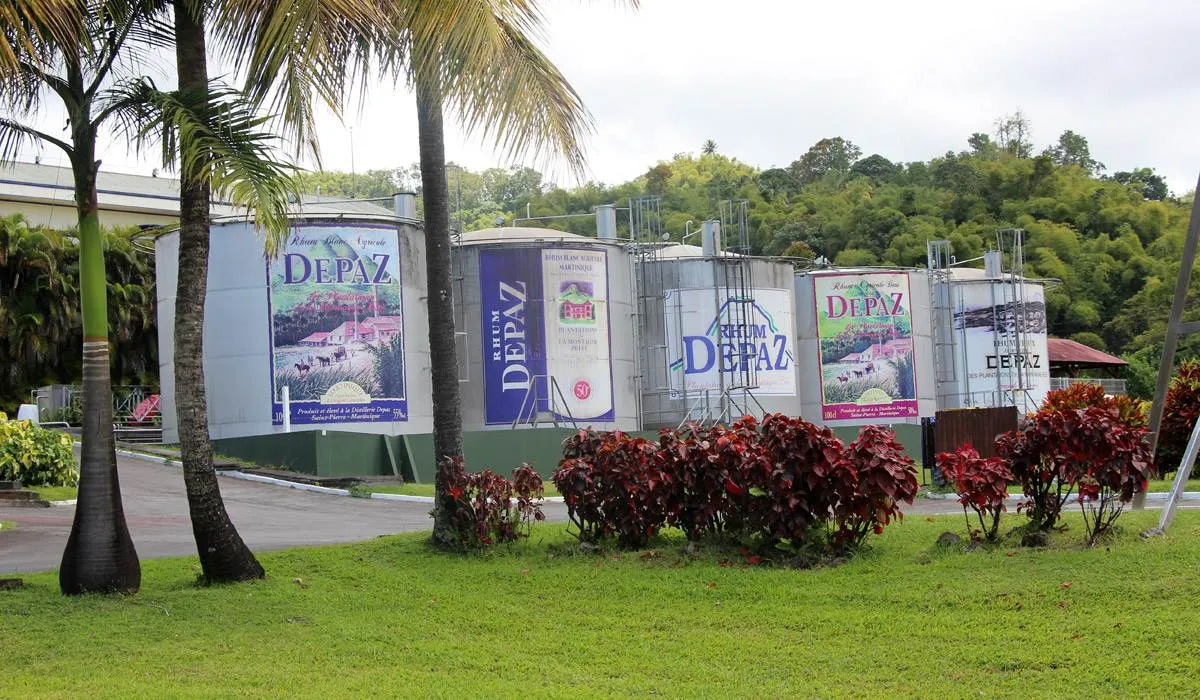
Depaz distillery
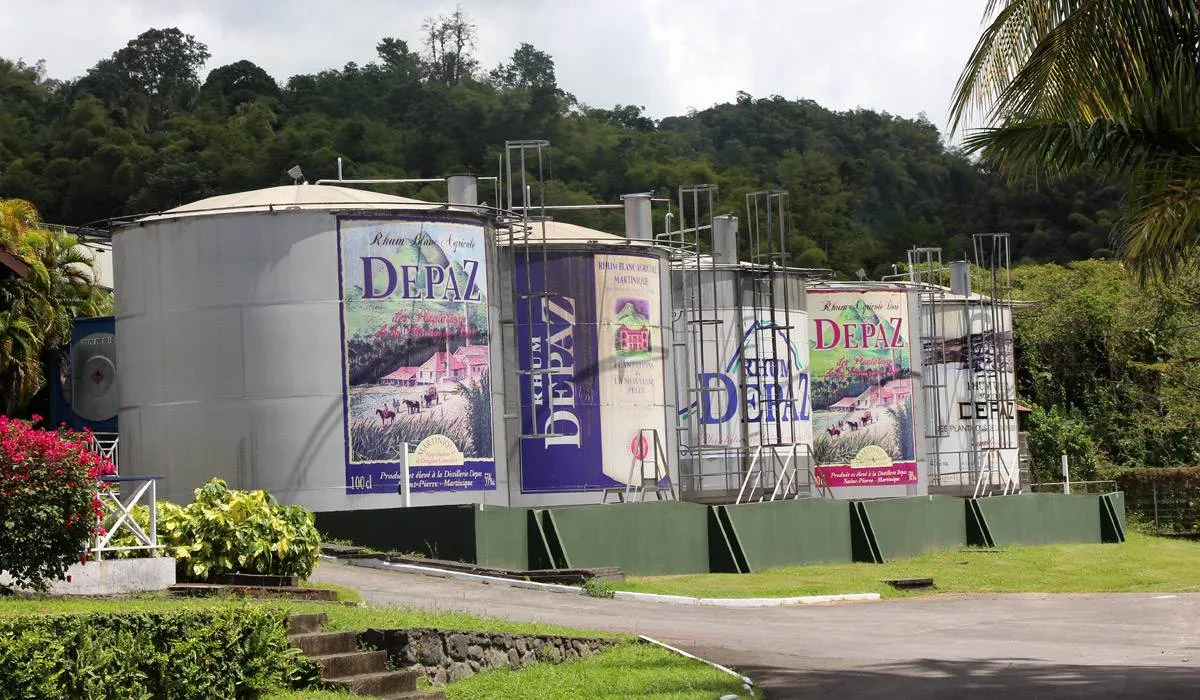
Depaz distillery
Depaz distillery
Depaz distillery
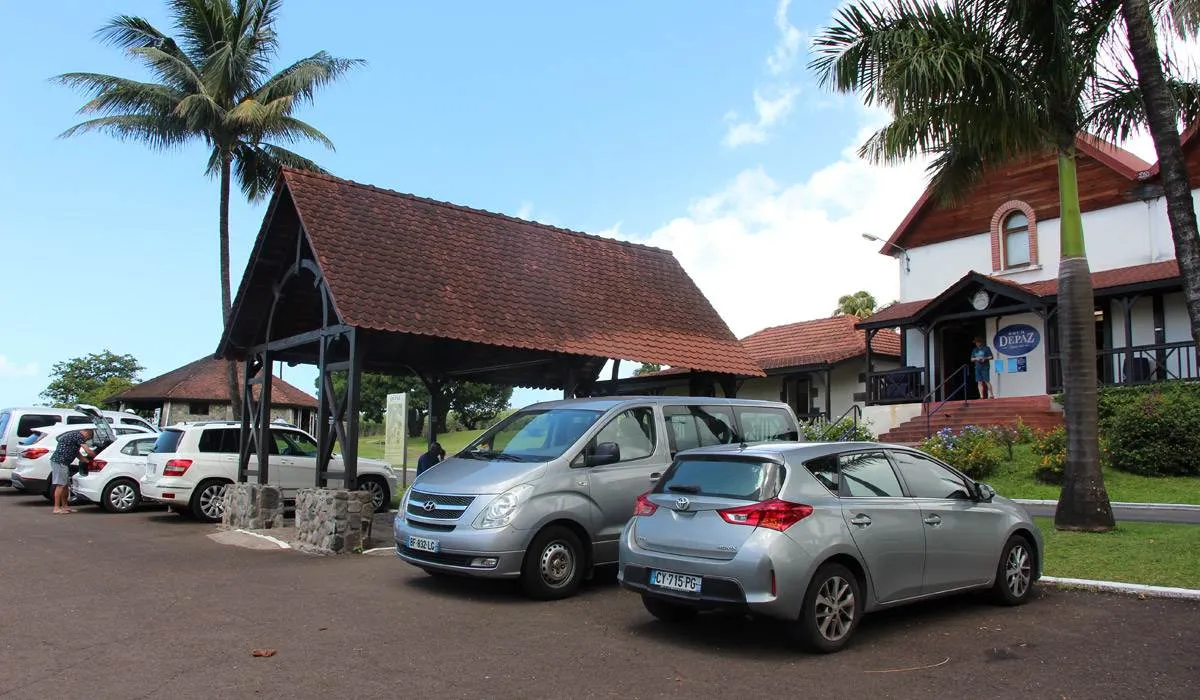
Parking of Depaz distillery
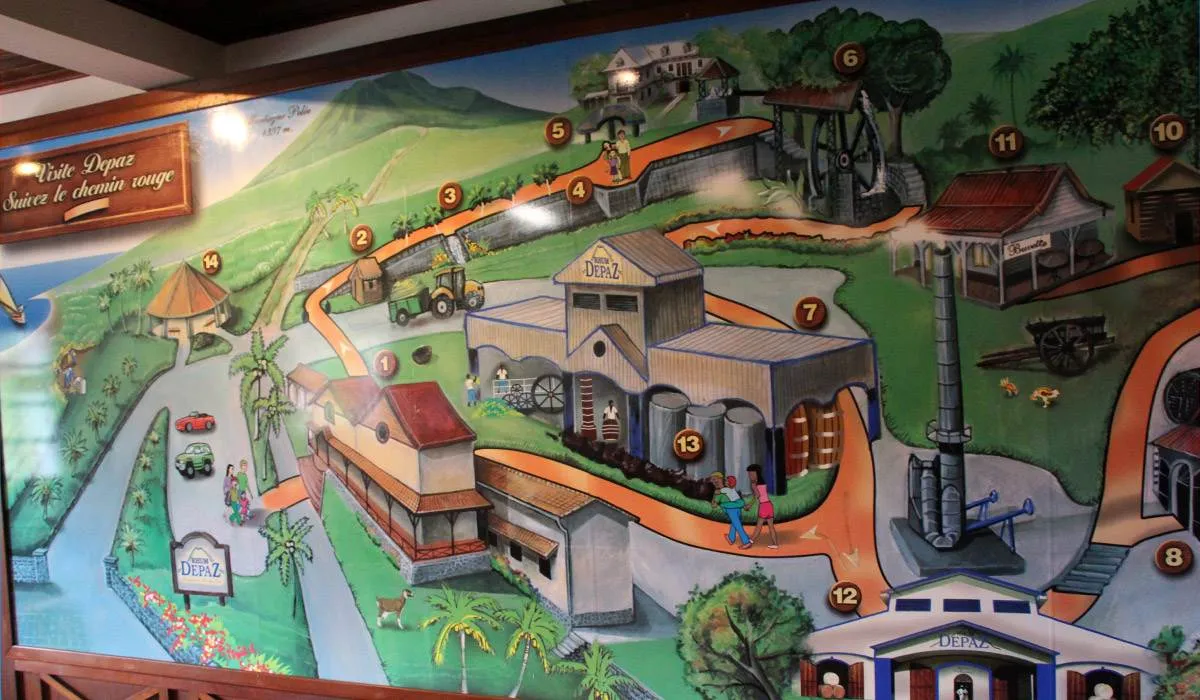
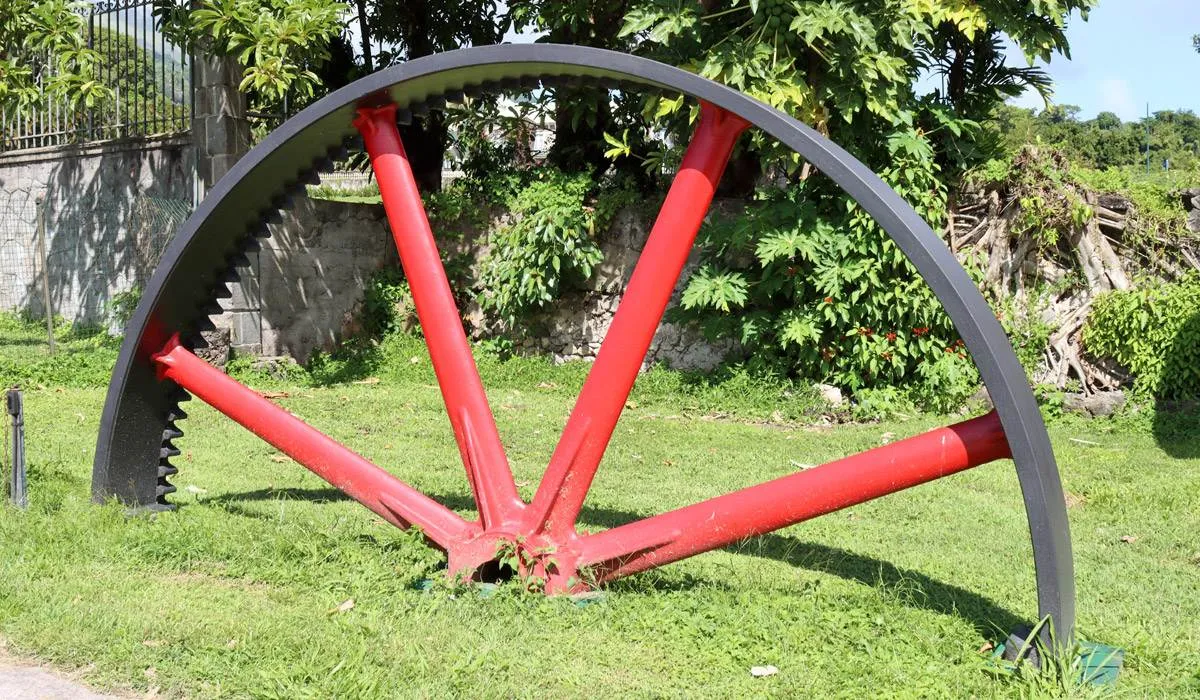
Mill at Depaz distillery
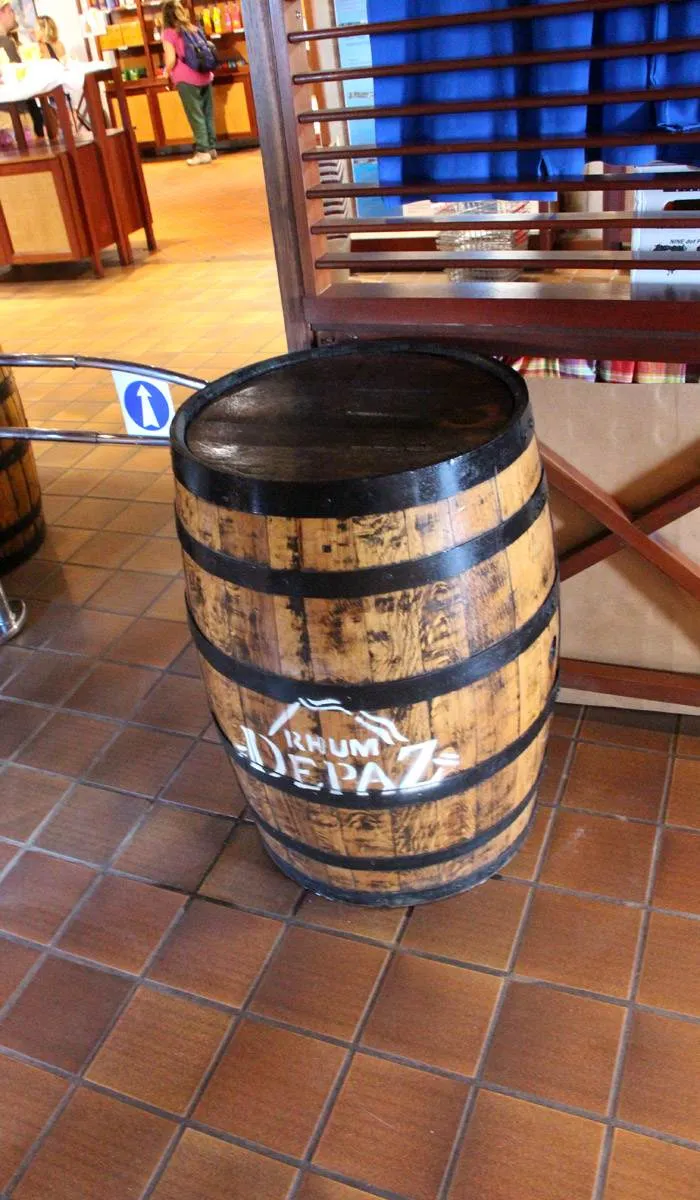
Depaz distillery's store
Depaz distillery
Depaz distillery
Depaz distillery
Depaz distillery
Depaz distillery
Depaz distillery
Depaz distillery
Depaz distillery
Mill at Depaz distillery
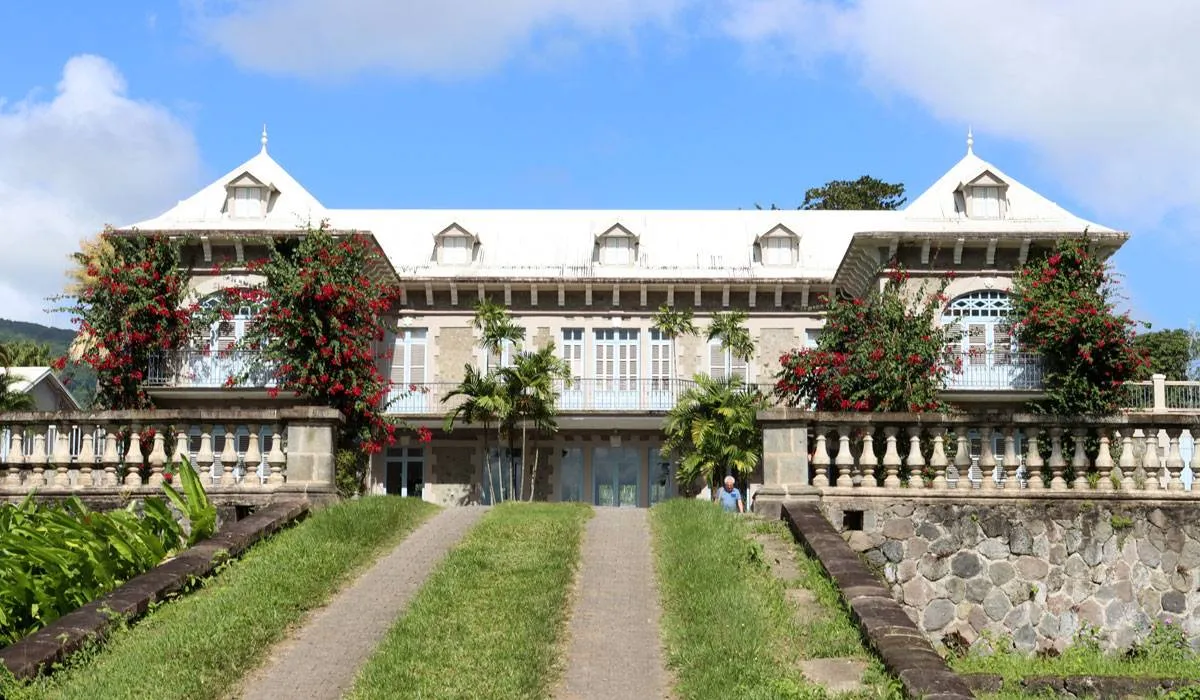
Depaz castle
Depaz castle

Trois Rivières

Trois Rivières is a distillery located in the commune of Sainte-Luce, in the district that shares its name, about 5 km from the town center. The estate spans approximately 600 hectares, including 120 hectares where sugarcane is cultivated in rotation with cattle farming. However, the distillery has not been active since 2003. The brand is now managed by the La Mauny distillery in Rivière-Pilote. A windmill is said to have once stood on the Trois Rivières site.

Trois Rivières white agricultural rum is available in 50°, 55°, and 62° proofs. These rums carry the Appellation d’Origine Contrôlée (A.O.C.) designation.

The Habitation Trois Rivières, also known as Habitation Grand Céron, was once the property of Nicolas Fouquet (1615–1680), Superintendent of Finances for the Kingdom and protégé of Cardinal Mazarin. Before his downfall and imprisonment by order of Louis XIV, Fouquet had built a sugar refinery on the site, along with an annexed distillery—remnants of which still exist today.
It was during the 19th century that the Céron estate was relocated to its current site.

Visitors can choose between a free self-guided tour and a paid guided tour that includes a tasting. There is also a boutique where guests can purchase branded items such as glassware sets, rum gift boxes, and other Trois Rivières merchandise.

Photo gallery
Trois Rivières distillery

Habitation Saint-Étienne

Habitation Saint-Étienne, or H.S.E., is a distillery built to replace an old sugar mill, La Maugée, covering more than 400 hectares from Gros-Morne to Saint-Joseph.

In 1882, the distillery was bought by Amédée Aubéry, a young captain of industry who became one of the iconic figures of the Martinican economy. Towards the end of the 19th century, faced with the sugar crisis, it was converted into a distillery, like many sugar plantations of the time.

Amédée Aubéry expanded the factory and gave it a remarkable façade with 28 arched windows, ensuring optimal ventilation of the building. He modernized the entire facility to maximize rum production efficiency.

In 1909, the distillery was bought by the Simonnet family, who developed the business until its decline in the late 1980s. In 1994, Yves and José Hayot took over the operation, relaunched the Saint-Étienne brand, and undertook the restoration and enhancement of the architectural heritage of the property.

Today, although rum distillation no longer takes place (since 1988), it continues to produce rums, known as HSE rums. Its preserved architectural ensemble is one of the best examples of the housing system in Martinique, offering a glimpse into life in the 19th century. The master's house and the former slave huts, later used by paid workers, have survived for two centuries and are open to visitors.

The site is listed in the Supplementary Inventory of Historic Monuments (I.S.M.H.). During the tour, you can see how HSE rum is produced, including the barrel storage system and bottling process, before tasting the rums made on site. Numerous exhibitions are held there throughout the year.

Photo gallery
Pink flowers at Habitation Saint-Étienne
Entrance to the Habitation Saint-Étienne
Red flower at Habitation Saint-Étienne
Main house at Habitation Saint-Étienne
Production of aged rum at Habitation Saint-Étienne

Maison La Mauny

The La Mauny distillery was founded in 1749. It takes its name from Count Ferdinand Poulain, the Count of Mauny, who settled in Martinique in the early 18th century. Originally, the La Mauny estate was dedicated to sugar production, but it successfully weathered the sugar crisis by shifting toward the production of agricultural rum around the mid-20th century.

The property was acquired by brothers Théodore and Georges Bellonnie. In the 1970s, Théodore Bellonnie partnered with the Bourdillon families to form the Rhums La Mauny company. The company was renamed Bellonnie Bourdillon et Successeurs (BBS), which also owns the Trois Rivières and Duquesne brands.

Since then, Trois Rivières and Duquesne rums have been produced at the La Mauny distillery. During the guided tour, you’ll discover how La Mauny’s various rums are made, from fresh cane juice to bottling. A tasting of different rums and punch varieties is also offered.

At the end of the tour, you can visit the shop to purchase rum or brand-related products from La Mauny, Trois Rivières, and Duquesne. You’ll also find punch made with La Mauny’s different rums.

To get there, head toward Rivière-Pilote via the N8. Signage will guide you to the distillery from there.

Photo gallery
La Mauny distillery
La Mauny distillery
La Mauny distillery
La Mauny distillery
La Mauny distillery
La Mauny distillery
La Mauny distillery
La Mauny distillery
La Mauny distillery
La Mauny distillery

La Favorite Distillery

La Favorite distillery was born in 1842 between Fort-de-France and Lamentin under the name of "Distillery Jambette", named after the river that fed it.

Its name was changed in 1851 by its owner, Charles Henry, in reference to an anecdote. Indeed, Joséphine de Beauharnais would have offered a bottle of rum from Habitation Jambette to Napoleon at the beginning of the First Empire, and she would say "This is my favorite liquor".

The estate has belonged to the Dormoy family for three generations. The estate, which has experienced ups and downs in its history due to periods of prosperity followed by more difficult times, was even a sugar factory at one point before becoming a distillery again.

Today, La Favorite is one of the last remaining family-owned and independent distilleries. It offers a wide variety of rums, including white rum, amber rum, and aged rum.

Photo gallery
Entrance sign to La Favorite distillery
Indication of the La Favorite distillery
Start of the tour of La Favorite distillery
Production machine at La Favorite distillery
Production tank at La Favorite distillery
Souvenir from La Favorite distillery
Entrance to the La Favorite distillery shop
Souvenirs from the La Favorite distillery shop
Bottles for sale from La Favorite distillery

Rhumerie JM

At the end of the 17th century, the famous “Father Labat” was the parish priest of the commune of Macouba. At that time, the house located on the banks of the Roche River was a sugar plantation.

In 1790, Antoine Leroux-Préville acquired it and gave it its current name, Fonds-Préville. In 1845, Antoine Leroux-Préville's daughters sold the property to Jean-Marie Martin, a merchant in Saint-Pierre and husband of Marie Ferment, daughter of a major plantation owner on the island.

Today, the Crassous de Médeuil heirs farm Martinique's three main crops: bananas (75 ha), pineapples (6 ha), and sugar cane (55 ha). It is the only farm to do so using crop rotation. The presence of these three crops and the JM distillery on the same farm is unique in Martinique and even in the Caribbean.

Since November 1996, Martinique's agricultural rums, including JM rums, have been awarded the Martinique Appellation d'Origine Contrôlée (AOC) designation. The Bellevue estate has 150 hectares of arable land, all of which is AOC terroir.

Photo gallery
Rhumerie JM
Rhumerie JM
Rhumerie JM
Rhumerie JM
Rhumerie JM
Rhumerie JM
Rhumerie JM
Rhumerie JM

Saint James distillery

Saint James rum is said to have originated in Saint-Pierre-de-la-Martinique in 1765. In utmost secrecy, Reverend Father Edmond Lefébure, superior of the Brothers of Charity convent and a learned alchemist, crafted a white spirit of unprecedented quality. This cane-based eau-de-vie was known as “guildive” or “tafia,” terms derived from the English expression kill-devil, once used to describe early rum.

In 1763, King Louis XV authorized Martinique to export its rum. At the time, the only permitted destination was New England — now part of the United States. In 1765, to facilitate its sale abroad, it was decided to give the rum a name with strong Anglo-Saxon resonance: “Saint James.”

In 1885, the “Saint James” brand was officially registered, along with its iconic square bottle — the first of its kind in the world. This innovative design allowed for easier storage in ship holds and reduced breakage during rough crossings. That same year, Saint James launched its first rum, relying on advertising to quickly build its reputation.

On May 8, 1902, the eruption of Mount Pelée destroyed the town of Saint-Pierre and the main site of Saint James. The Saint James Habitation was only partially damaged.

In 1974, all production was centralized at a single site in Sainte-Marie, where the distillery still operates today. The official inauguration took place on December 23, 1974, in the presence of Jacques Chirac, then Prime Minister.

A museum was established near the Habitation to trace the history of rum in Martinique, from its origins to its modern evolution.

Today, the Saint James distillery remains active. Its sugarcane plantations span nearly 300 hectares.

A must-see: hop aboard the “Train des Plantations,” an authentic vintage steam train offering a scenic ride through the Atlantic North, winding through sugarcane fields and banana plantations.

Photo gallery
Saint James distillery
Map showing the stages of the tour of the Saint James distillery
Old rum-making machine
Red pineapple at Saint James distillery
Saint James Distillery
Saint James' distillery store
Rum museum at Saint James
Saint James Distillery
Rum Museum sign
Rum Museum sign

Le Galion

Former possession of the powerful family Dubuc, the sugar refinery Galion became the possession of a merchant of Saint-Pierre, Eugene Eustache who bought the debt of the former owners.

Around 1861, he decided to make a factory because the sugar plantations closed the ones after the other due to the foreign competition. The institution created is called "Usine le Galion". He bought the plantations nearby to supply sugar canes directly without having to buy. Gradually it has an area of ​​2300 hectares.

Galion got prosperous and the strong demand for sugar in the early 20th century allow him to make impressive profits. However, from the mid-20th century the factory is experienced major difficulties due to management problems, the sharp decline in demand, and the cost of production of sugar cane.

In 1984, the management of Le Galion is transferred to local authorities which inject money to cover its debts. Today le Galion belongs to an European investment fund (COFFEP) which the holding company La Martiniquaise is the owner of distilleries Dillon, Depaz, Negrita, etc. It is situated on the N1 between the cities of Robert et Trinité.

Photo gallery
Entrée de la l'Usine du Galion
Remorque utilisée lors de la récolte de la canne
Boutique de l'usine du Galion