History
The coffee plum, scientifically known as Flacourtia jangomas, is also called prune café or prune d’Inde in Martinique. It is believed to originate from India and Malaysia before reaching the Caribbean toward the end of the 18th century. It is therefore around this period that the coffee plum would have arrived in Martinique.
Varieties
There are many varieties, differing in the size and color of the fruit. The coffee plum tree is a medium‑sized species that does not exceed 10 meters in height. It is cultivated both for its ornamental value and, of course, for its fruits.
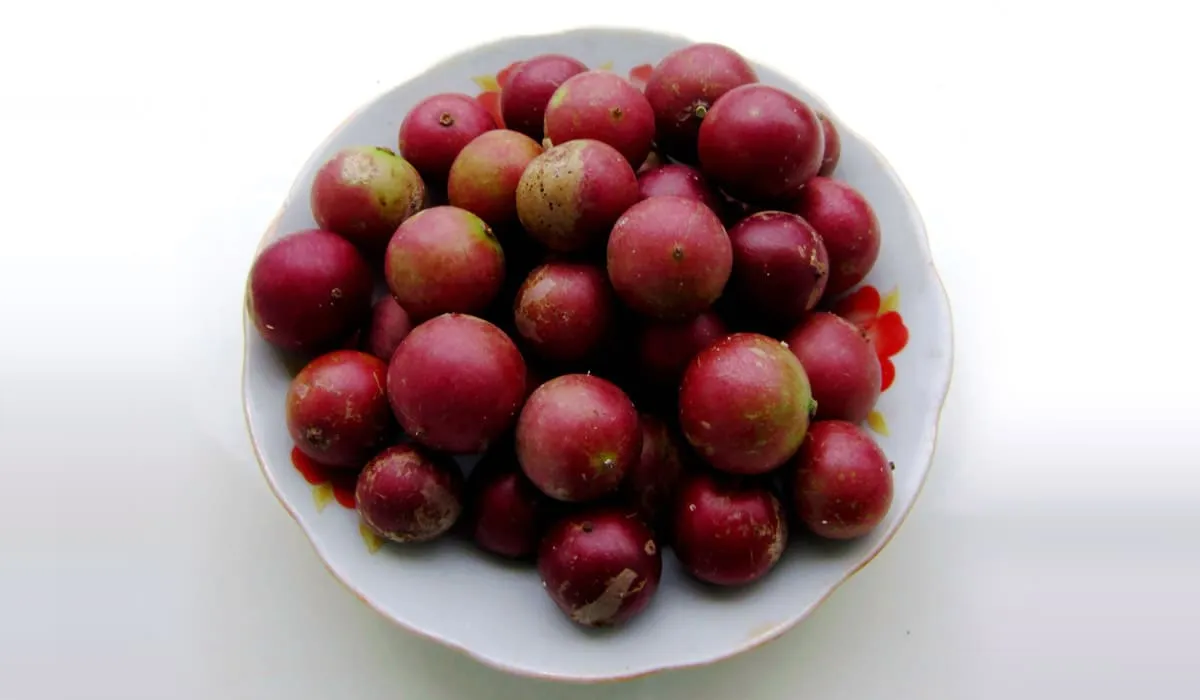
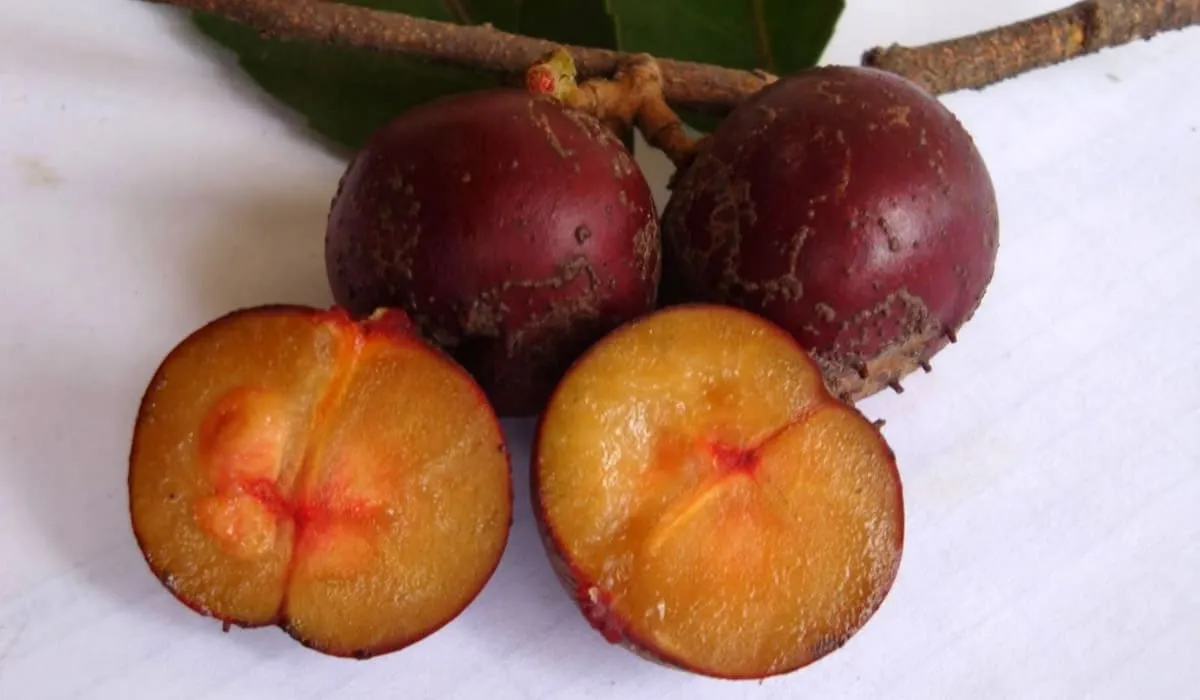
Its branches are drooping and well‑branched, with slender, elliptic‑oval leaves that taper to a point. Its small white or yellow‑green flowers give rise to nearly spherical berries that turn reddish‑brown to dark brown‑black when ripe.
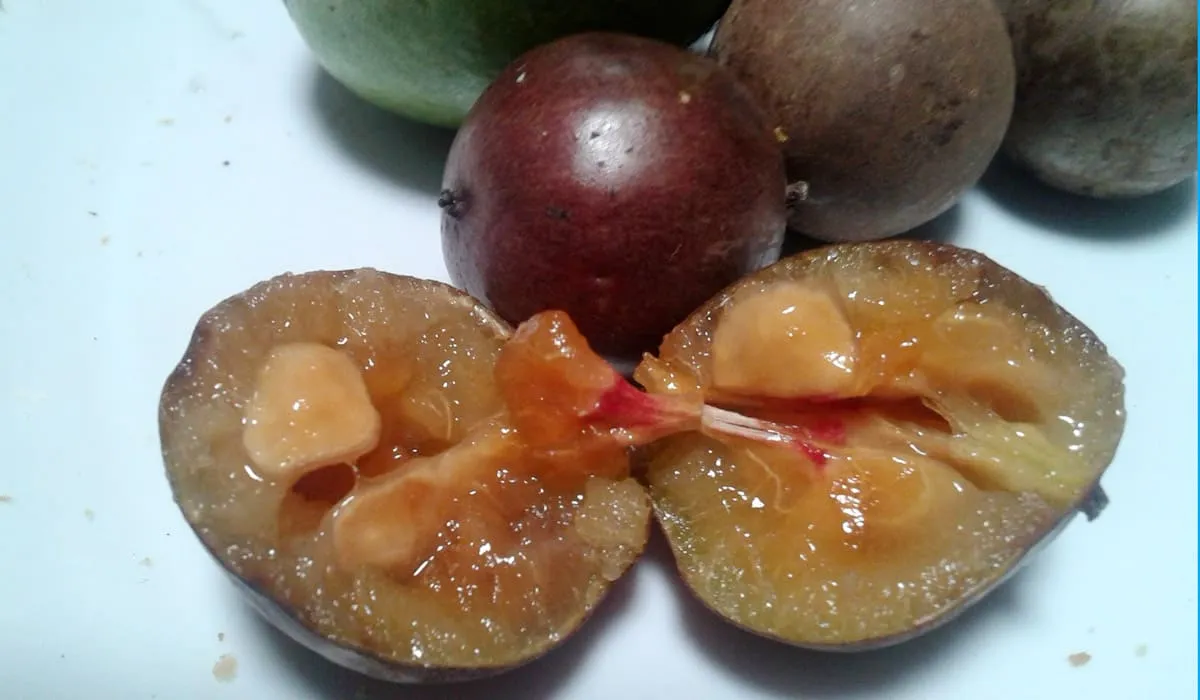
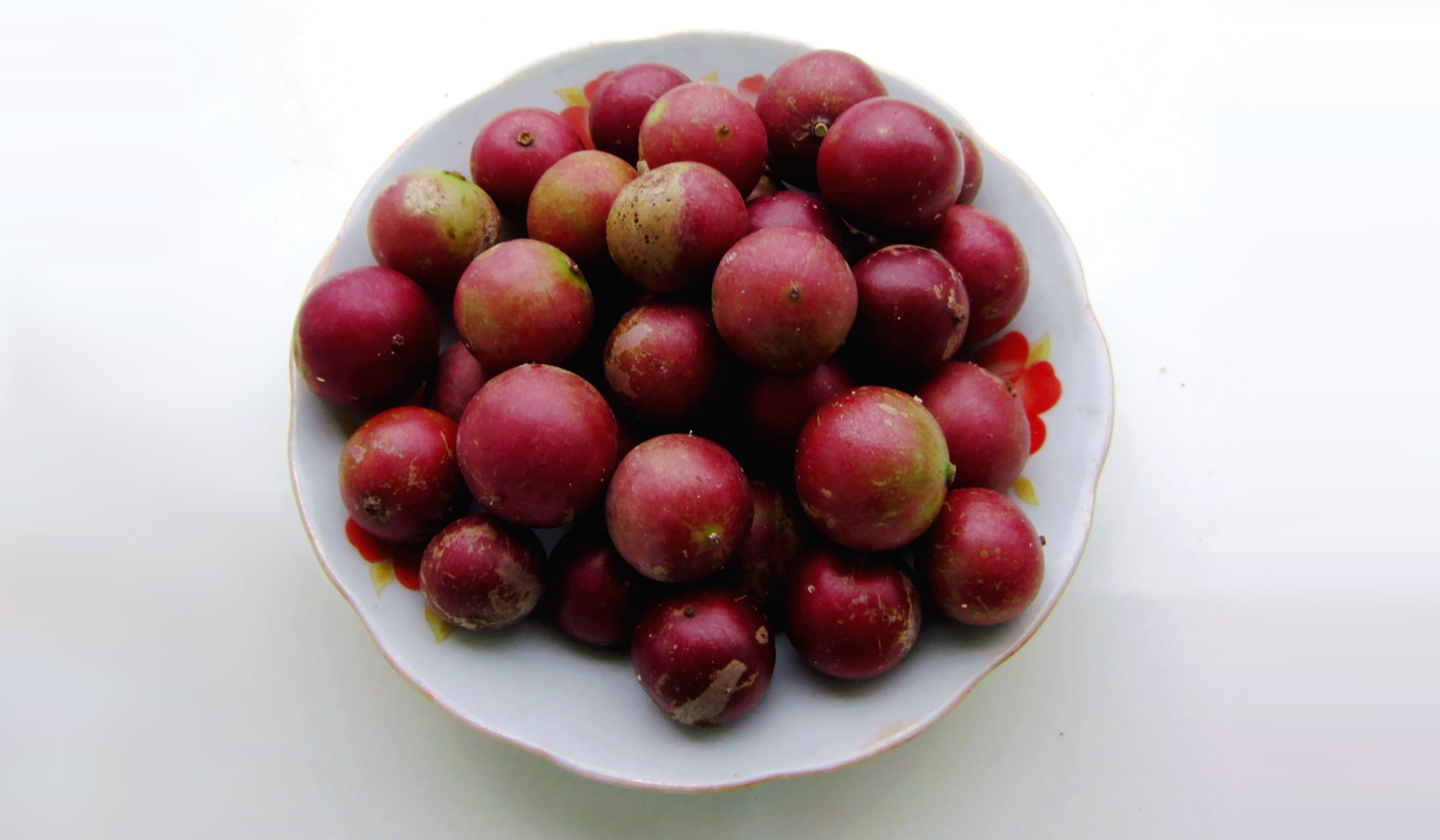
The yellow‑green pulp contains 4 to 10 small seeds. The fruit measures between 2 and 3 cm in diameter and changes from green to deep purplish red as it reaches maturity.
After sowing the seeds, you can expect fruit production 2 to 3 years later. Fruiting generally occurs from June to September. It is recommended to wait until the fruit turns red before picking it.
Medicinal Properties
The leaves and young shoots have a rhubarb‑like taste and are astringent, anti‑diarrheal, and stomachic. They are also used to relieve hemorrhoids and various types of cough. They help treat diarrhea and can be used in cases of chronic bronchitis.
The leaves and bark are useful for bleeding gums and toothaches. A bark infusion is used as a gargle.
They are also used against asthma, inflammation, skin diseases, nausea, and dyspepsia. Coffee plum stimulates the appetite, acts as a diuretic and digestive, helps with spleen disorders, and is used to treat jaundice. It is also said to help fight diabetes and tumors, and it has strong antioxidant activity.
The roots of the coffee plum tree are used as a cooling agent and have alexipharmic (detoxifying) and depurative properties.
In Ayurveda, the roots are used to treat mouth ulcers.
Uses
Coffee plum is eaten when the fruit is fully ripe and after being gently kneaded between the fingers. This helps reduce its bitterness, giving it a tangy and sweet flavor. Its taste is similar to that of a plum.
It is used to make delicious pies, marmalades, and jams.