
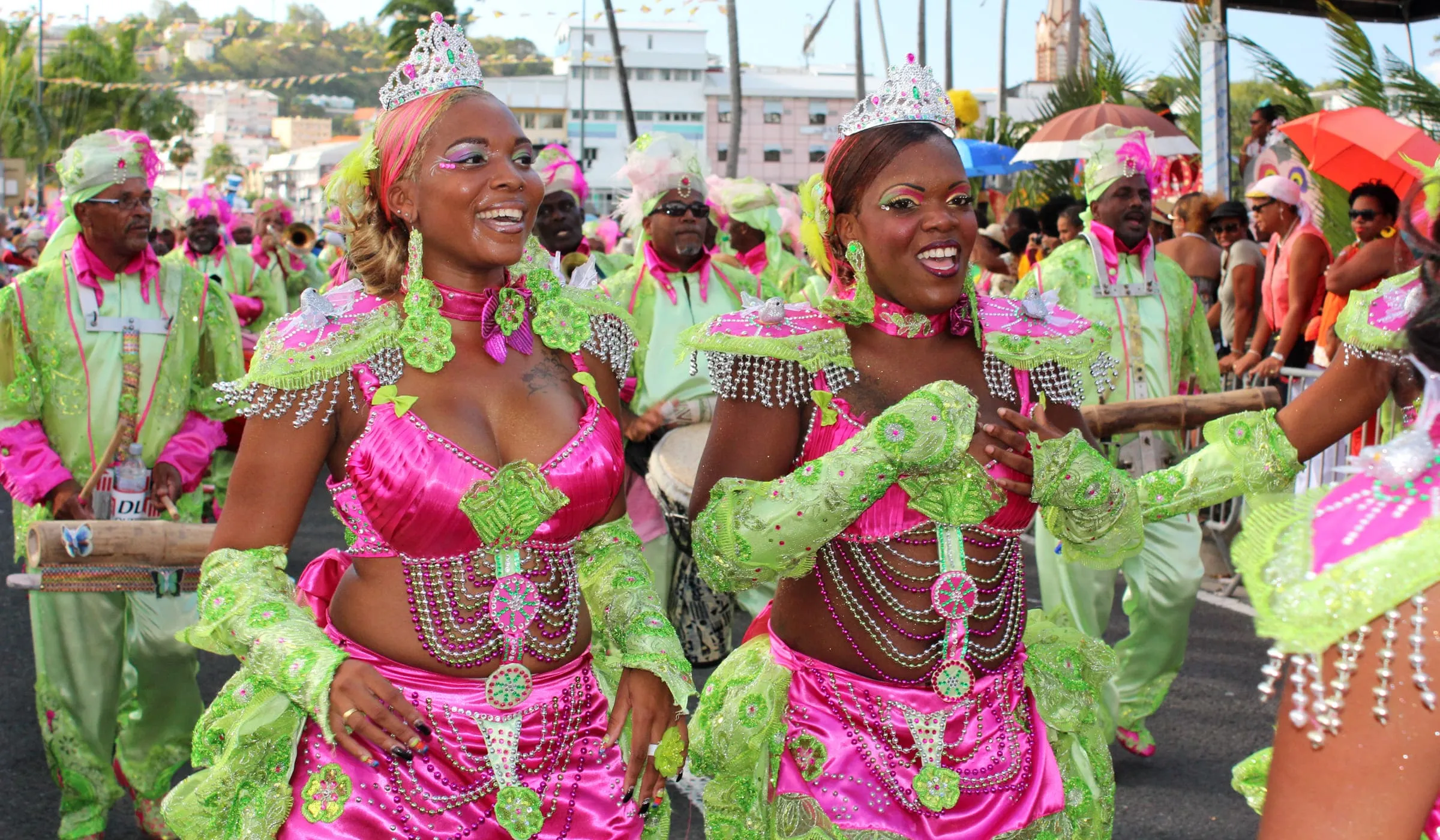
Characters of the Martinique Carnival
Thus, the different characters of the Martinique Carnival appeared:
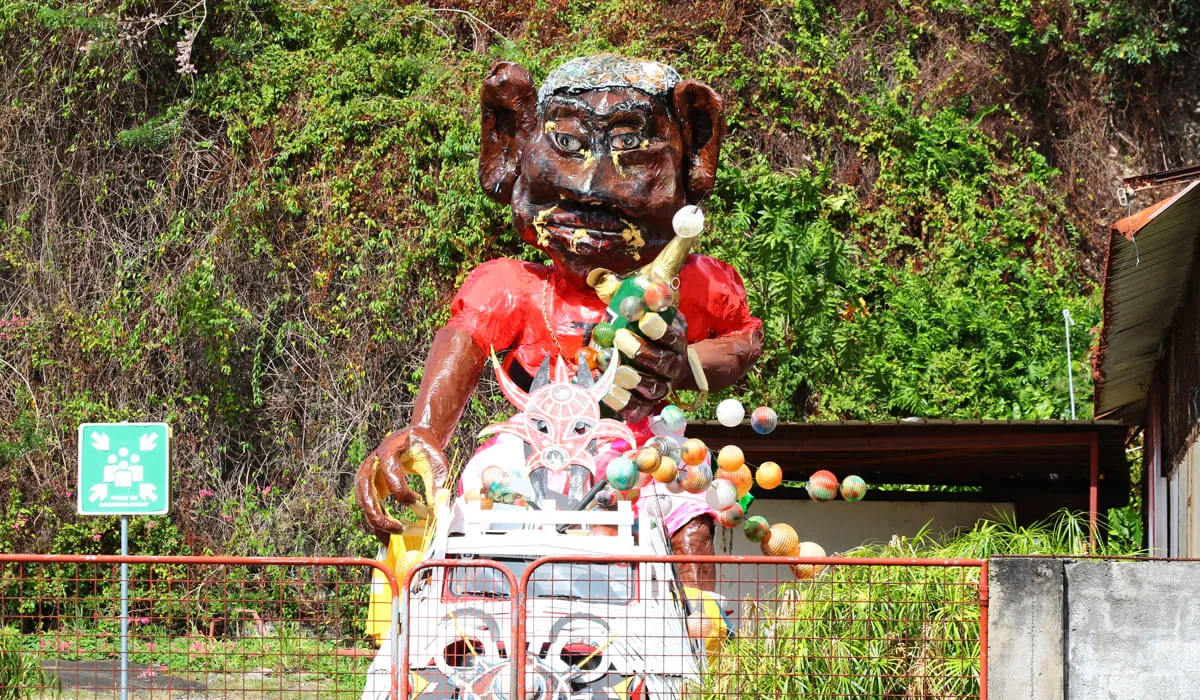
- Sa Majesté Vaval (His Majesty Vaval), the giant puppet, King of Carnival, will lead the parade bus and the parade. It is either a character, a true story, a political fact, or about local, national, or international news. Prepared several months in advance in the greatest secrecy, it appears on the Shrove Sunday parade head after a confection made in great secrecy by various associations of the city. During the entire Shrovetide, it will be celebrated and honored until Ash Wednesday night, he is burned in a square, close to the Bay of Fort-de-France, the Malecon.
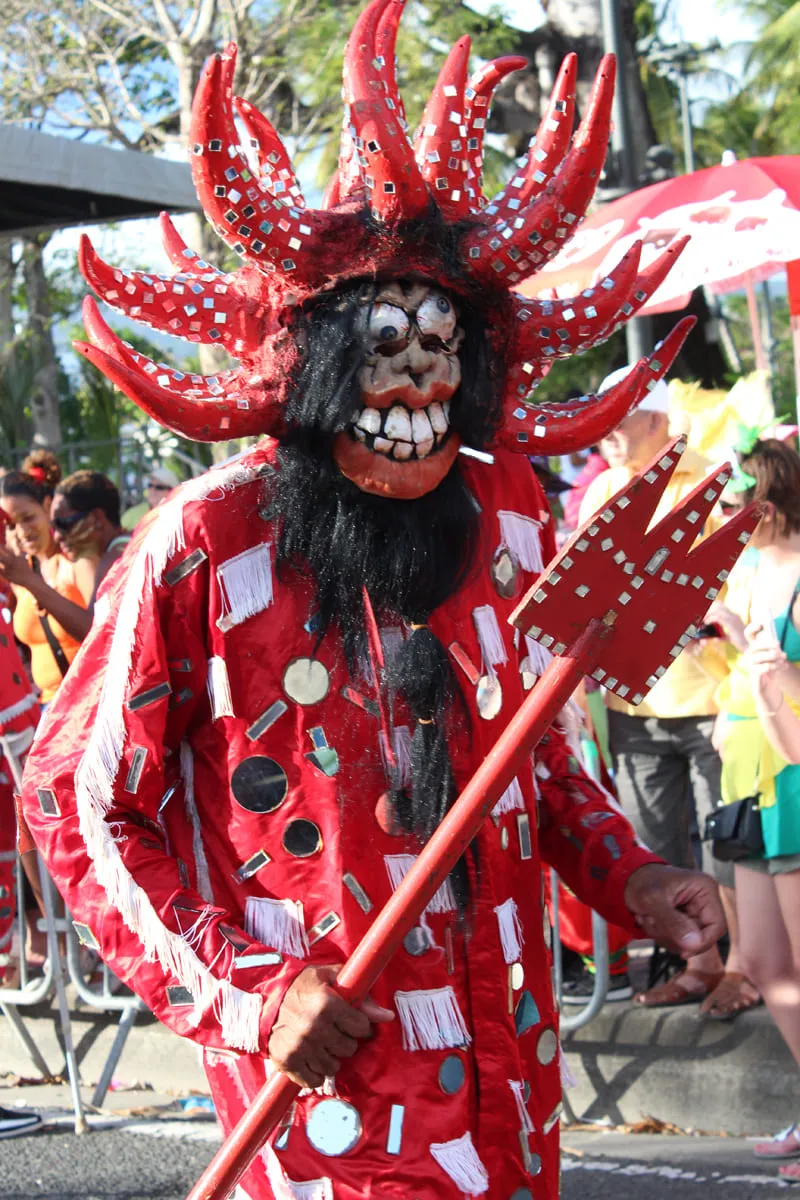
- The Diable Rouge (Red Devil) comes directly from Africa. The mask was manufactured using various materials and recycled objects like mirrors and was inspired by harvest masks from Casamance, a region of southern Senegal. It wears bovine horns and reveals only the eyes. They are honored on Mardi Gras, which is sometimes called Red Devils Day.
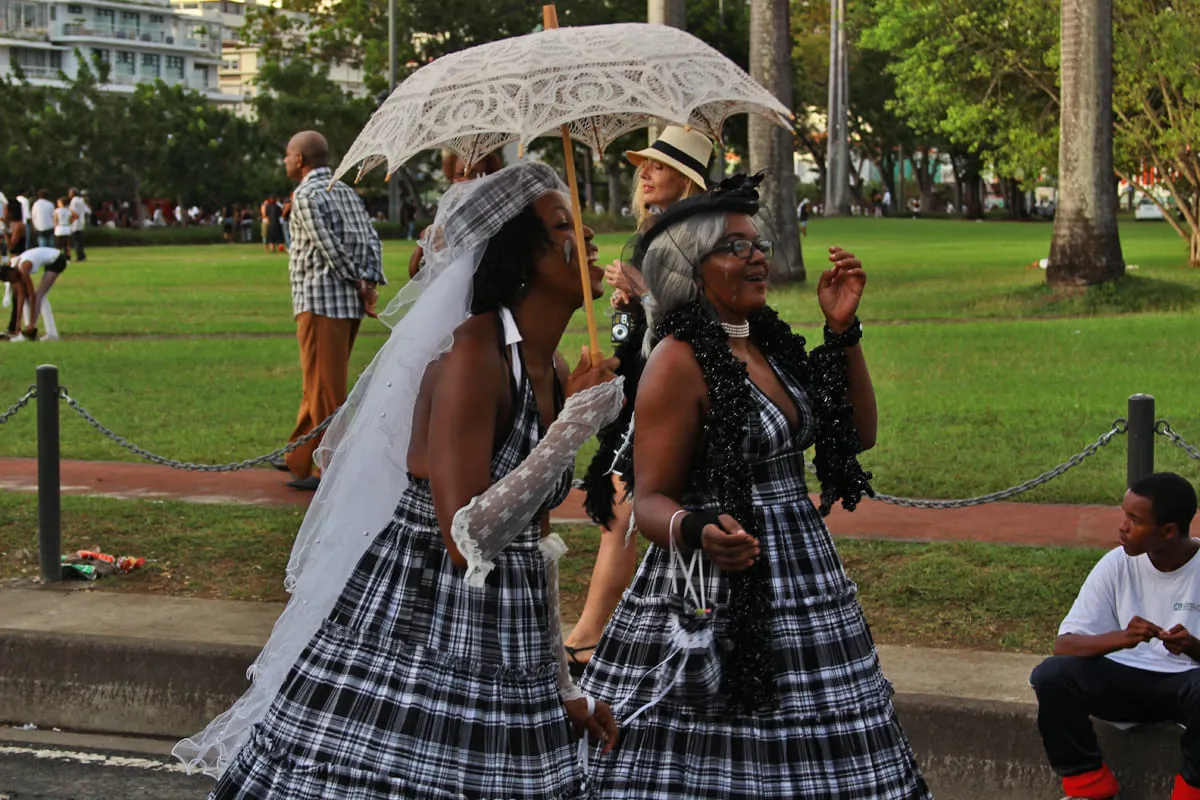
- The Guiablesse is the grieving widow of King Vaval. It appears only on Ash Wednesday, dressed in Black and White, came crying Vaval to be cremated on Wednesday evening at the end of Carnival.
- The coupeur de canne (cane cutter) is a character that dates back to Carnaval 1849, the year following the abolition of slavery. The former slaves dressed up as former slaves to ridicule their former job as cane cutters. The cane cutter is less and less present in today's processions. Note that even during the slave era, slaves sometimes dressed up like their masters just to make fun of them.

- The nèg Gwo Siwo is a character, like the cane cutter, symbolizing the slaves. Brushed with cane syrup mixed with charcoal, they scare off the crowds. They have remained trendy with part of the Haitian community, which is very active in the various carnival parades.
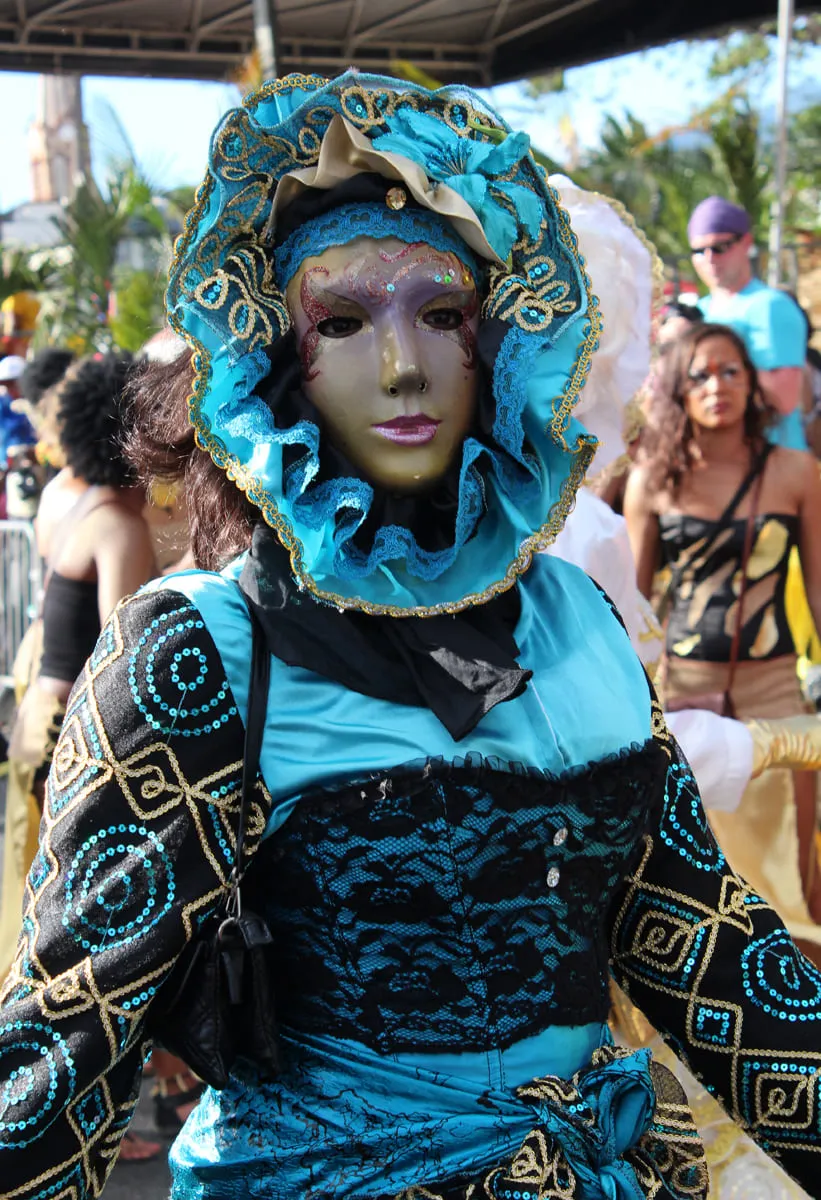
- The "Touloulous", once very present in the parades of Saint-Pierre, disappeared in Fort-de-France before returning recently through local associations. Very popular in French Guiana, the Touloulou, who wears a mask reminiscent of Carnival in Venice, symbolizes the domineering woman, superior in her hierarchy to the man.
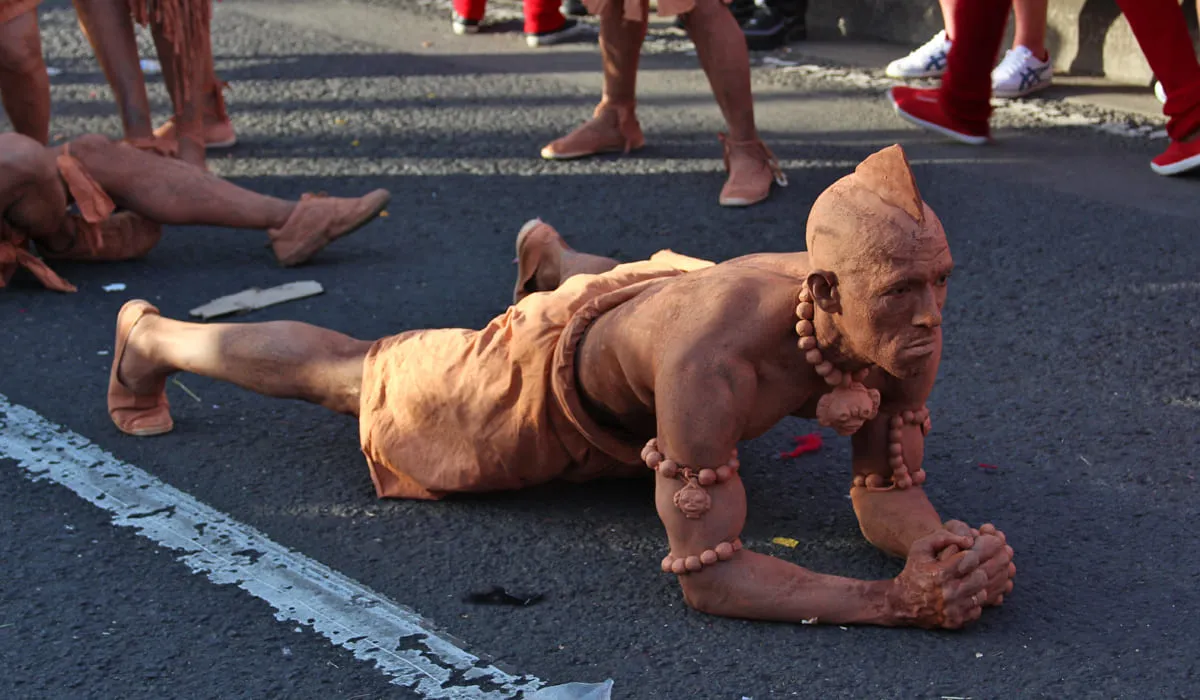
- Clay Men are the Pottery workers of Trois-Ilets, one of the oldest companies in Martinique, currently still active.
- Karolyn zyé Kokli is a woman carrying on her back her alcoholic husband every night on his shoulders. The weight of the latter is squinting her eyes.
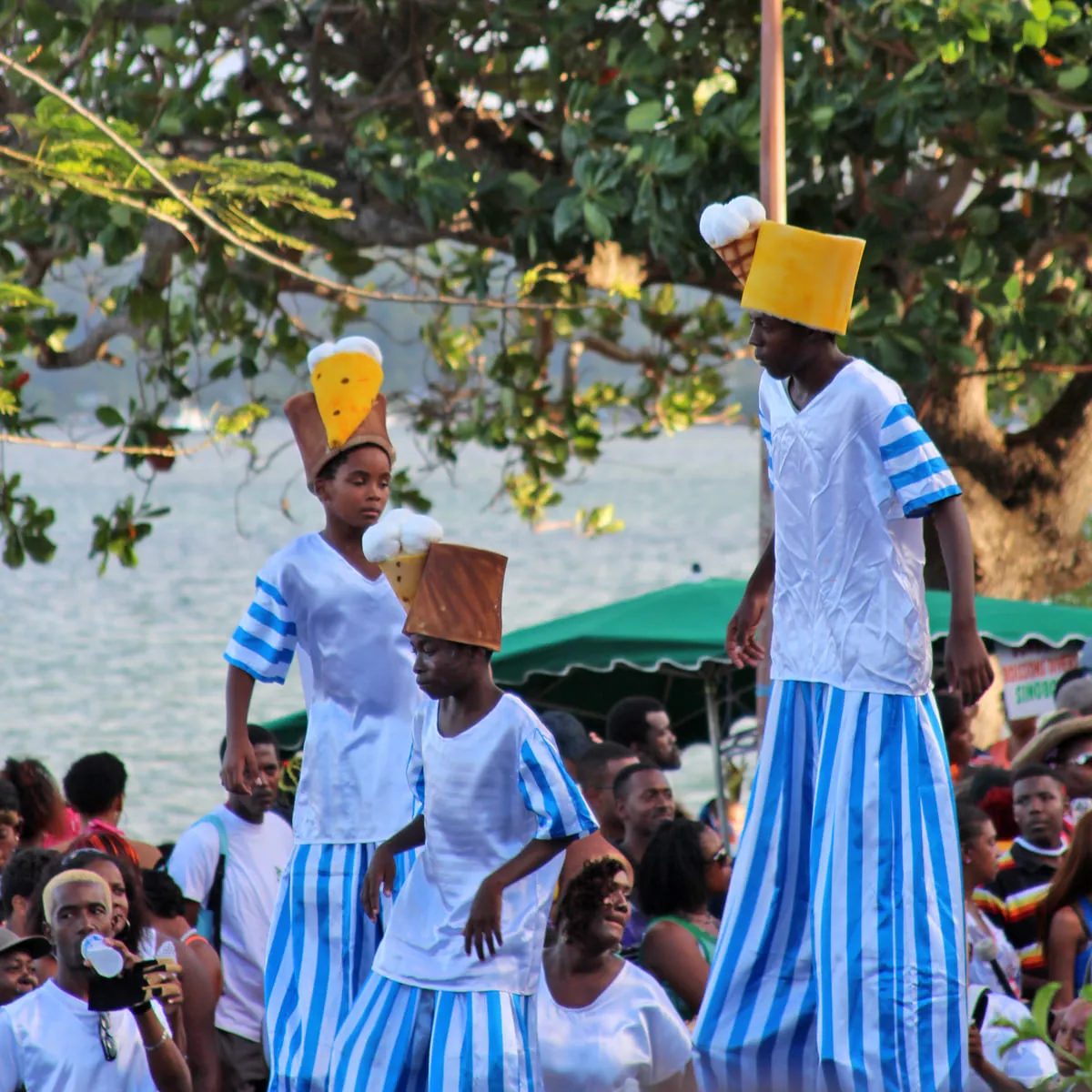
- The mokozombies are stilt men that disappeared gradually during the Martinique Carnival, but you can find them in Guadeloupe, French Guiana, or the Carnival of Paris.
- Finally, Maryan Lapo fig comes straight to the Saint-Pierre Carnival, and the 19th century. According to legend, a circus representation in the city of Saint-Pierre would have seen its bear escape. Not to disappoint the audience, a woman disguised as a bear with a costume using dried banana leaves to fill in the missing bear. Maryan Lapo fig mimics the bear. It is usually accompanied by a puppeteer and a musician.