
History
The melon, whose scientific name is Cucumis melo, is not only a fruit but also an herbaceous plant originating from intertropical Africa. The fruit, also called “melon,” is believed to have arrived in Martinique during the colonial period, at the same time as enslaved people brought from Africa. It later spread across the island, was cultivated in gardens, and served as food for enslaved populations.
Varieties
There are many varieties of melons. The wild fruit originally weighed no more than 30 to 50 grams, but it served as the basis for the development of numerous cultivated varieties. Among the melons eaten as fruits and harvested when ripe, we find:
- Charentais cantaloupe (a smooth‑skinned variety grown in the Antilles)
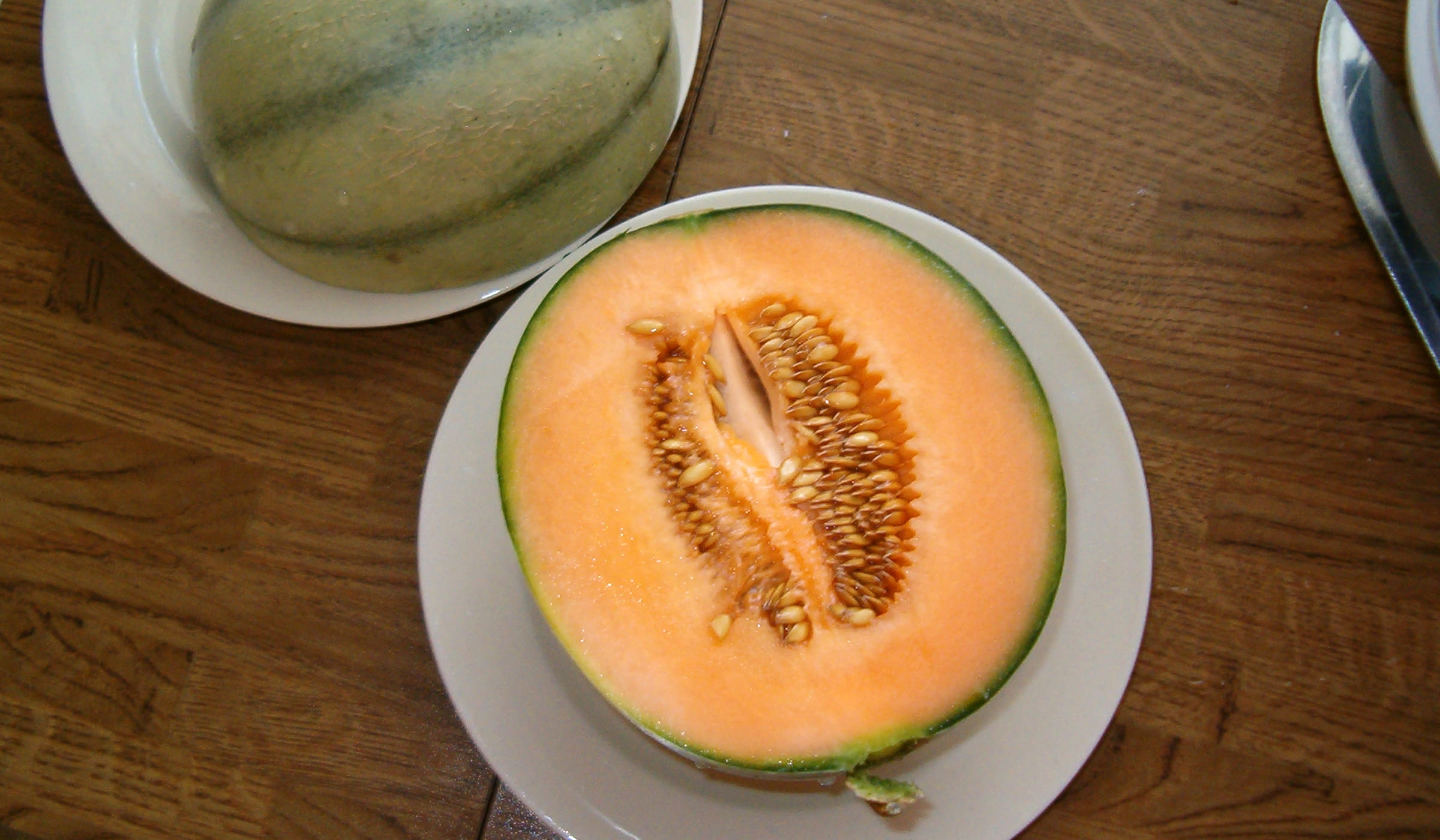
- Netted melon (its skin is covered with net‑like ridges, and its flesh may be salmon‑colored or yellow‑green)
- Winter melon (with yellow or green skin, white flesh, and an oval shape resembling a rugby ball)
And among the melons eaten as vegetables:
- Serpent melon
- Phut melon (in India)
The fruit is round, with a beige to white skin that is more or less smooth (the variety in Martinique has smooth skin) and clearly marked green divisions. Inside, an edible orange pulp surrounds numerous seeds at the center. The creeping plant produces fruits directly on the ground and bears yellowish flowers with five petals.
Melon cultivation depends heavily on weather conditions. The more sunshine there is, the faster the melon ripens and can be harvested; however, in periods of heavy rainfall, the plant struggles to produce fruit.
Melons are harvested at full maturity, when their sugar content and aromas are at their peak.
Medicinal Properties
Rich in vitamins A and C, melon has many antioxidant properties. It contributes to cell growth and development, supports collagen production, and aids healing.
With 95% water, melon is extremely refreshing and quenches even the driest thirst.
Melon is also diuretic. It is low in sugar, high in water, and low in calories (100 grams of fresh melon provide about 32 kilocalories). Its fiber content promotes healthy digestion and intestinal transit.
Uses
In Martinique, melon is mainly eaten fresh. It is excellent in fruit salads. It can also be used to make fritters or sorbets. Decorative melon carvings can often be seen at gastronomic events.
Antillean melon is harvested both for the local market and for national distribution.
To choose a good melon, check its weight—the heavier it is, the denser the flesh. Smell it to ensure its aroma is pronounced. Finally, check that the stem area is slightly cracked, a sign of ripeness.


