Hardy distillery

The Hardy distillery is located in Tartane, facing Anse de la Brêche and near the Caravelle Peninsula. It is undoubtedly one of the lesser-known distilleries in Martinique. Yet it produces a historic rum of the island, born in 1830 when the estate—then called “La Grâce”—was renamed “Habitation Sucrerie Tartane.” At the time, it included a residence, industrial buildings, sugarcane plantations, and a windmill, which can still be admired from the roadside.

A few years later, Émilien Bonneville, a wealthy landowner from the Tartane region, decided to purchase the estate.

In 1880, in a habitation that had previously produced only sugar, Bonneville installed a steam engine to begin distilling rum. Martinique was then in the midst of a sugar crisis, and many distilleries had turned to rum production.

He later passed the estate on to his daughter Clémence, who was married to Gaston Hardy des Sources.

In 1905, the estate was officially transferred to Gaston Hardy, who gave it its name: “Rhum G Hardy Tartane.” His rum was distinguished and won several medals in mainland France. Although the distillery was devastated by two fires, it was fully restored by his son—also named Gaston—who was an engineer.

In 1955, Gaston Hardy Jr. became the owner. To boost the brand’s reputation, he created the famous Rhum Paille, aged for 12 to 18 months in oak barrels. This helped solidify Hardy’s renown.

In the 1970s, he personally oversaw the renovation and modernization of the production facilities, including the windmill mechanism, a concrete chimney, a distillation column, and an automatic feed belt that he built himself.

He passed away in 1990, and the distillery continued operating until 1994.

His heirs took over and transferred production to the Saint-James distillery in Sainte-Marie. Hardy rum is now produced according to the strict standards of the Appellation d’Origine Contrôlée (A.O.C.). A boutique at the entrance of the original site offers tastings and sells the full range of Hardy rums. Production remains limited (120,000 bottles), and distribution is local only.

Over time, the buildings suffered damage from humidity, but public authorities launched a fundraising campaign to restore the site. Some buildings are currently undergoing renovation, but this historic location remains open to visitors.

Photo gallery
Hardy Distillery Shop
Hardy distillery rum
Entrance sign to the Hardy distillery
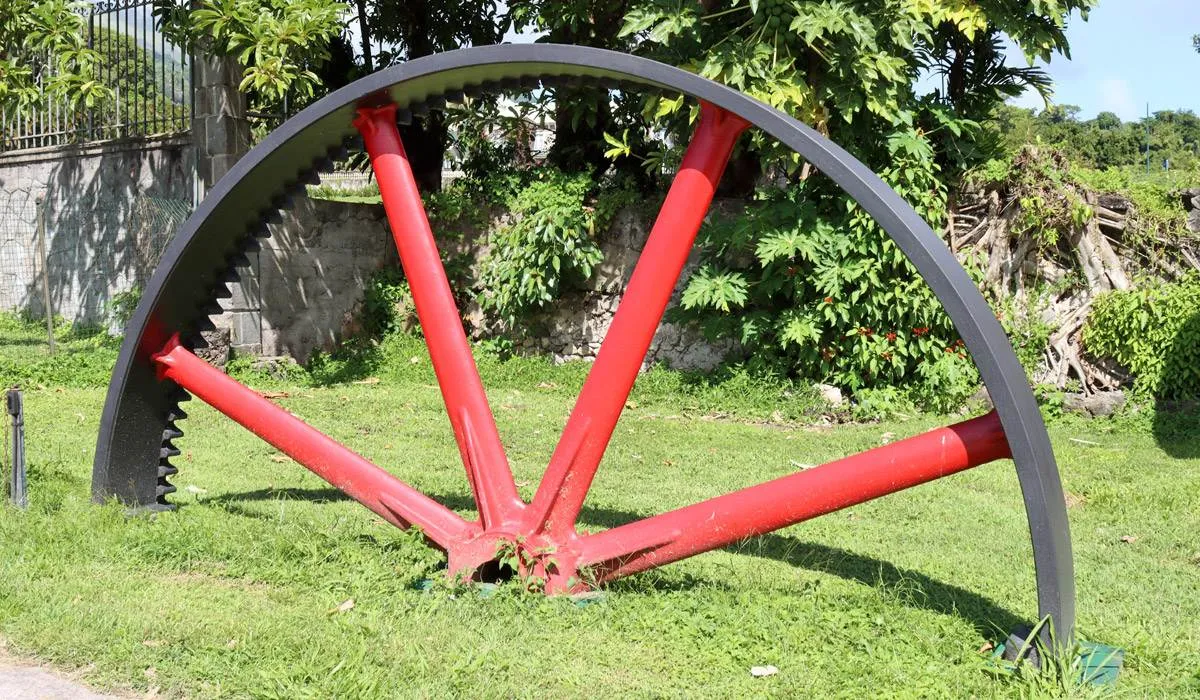
Old production machine from the Hardy distillery
Hardy Distillery Shop
Rums for sale at the Hardy distillery

Paille Caraïbe

“La Paille Caraïbe” is a basketry workshop located in the Morne‑des‑Esses district of Sainte‑Marie. It has preserved the craft practices of pre‑Columbian tradition, passed down orally — a true heritage from the Kalinago (Carib) people. This Creole workshop continues to uphold Amerindian know‑how, its gestures, and its techniques.

Created in 1967, it originally brought together around fifty artisans. Today, only two or three remain, all over 70 years old. The knowledge has been passed down from father to son. The various objects are crafted using two main tropical plants: cachibou and aroman, from which the precious weaving stems are extracted. Visitors can watch demonstrations of dyeing and weaving techniques.

The site also includes an exhibition and sales area where you can see and purchase the items woven on‑site: bags, bracelets, necklaces, rings, “attrapes‑doudou,” mats, pottery, lamps and floor lamps, suitcases, sewing boxes, Caribbean baskets, bottles, vases, hats of all kinds, and more.

A perfect opportunity to take home a souvenir, with prices starting at €3.

To get there, head toward the Morne‑des‑Esses district via the D25. The workshop is located about 6 km from the town center of Sainte‑Marie.

Photo gallery
Wicker basket
Wicker basket

Village de la poterie

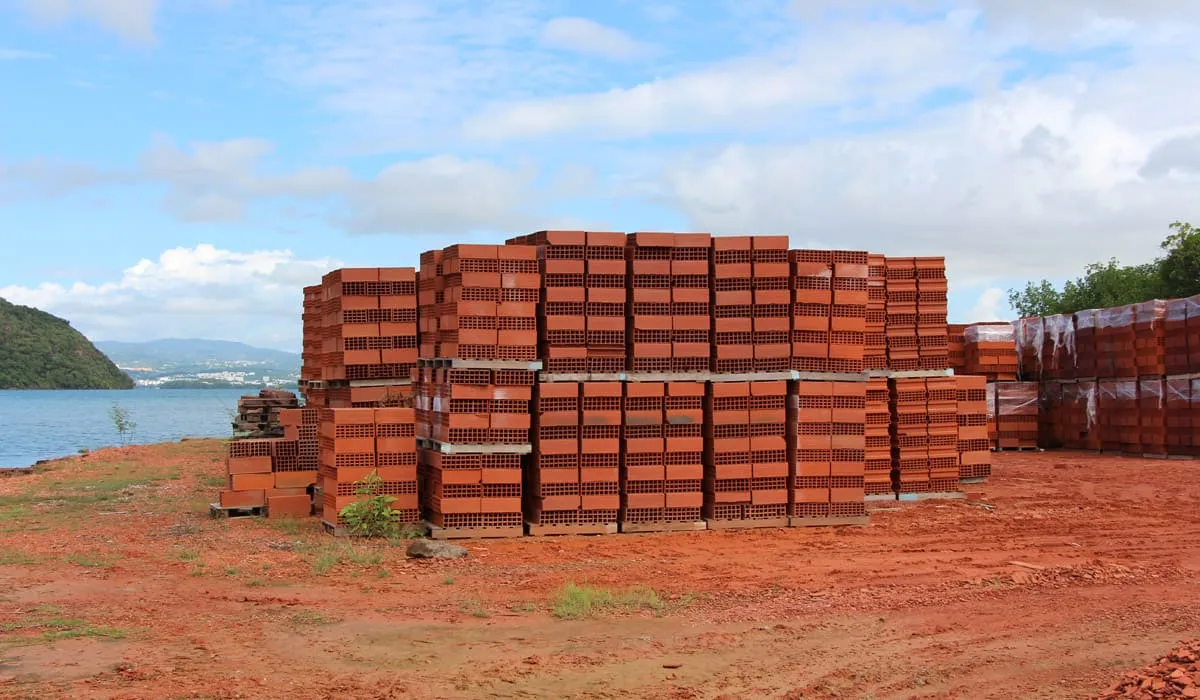
Since 1783, the Poterie des Trois-Îlets has existed, making it one of the oldest companies in Martinique. The Village de la Poterie is located on the site of a former Jesuit convent established at the end of the 17th century. Its main activity has always been working with clay.

Over the years, the Poterie des Trois-Îlets has expanded the crafts of terracotta, combining industry (production of bricks, tiles, and floor tiles) with craftsmanship (terracotta pottery).

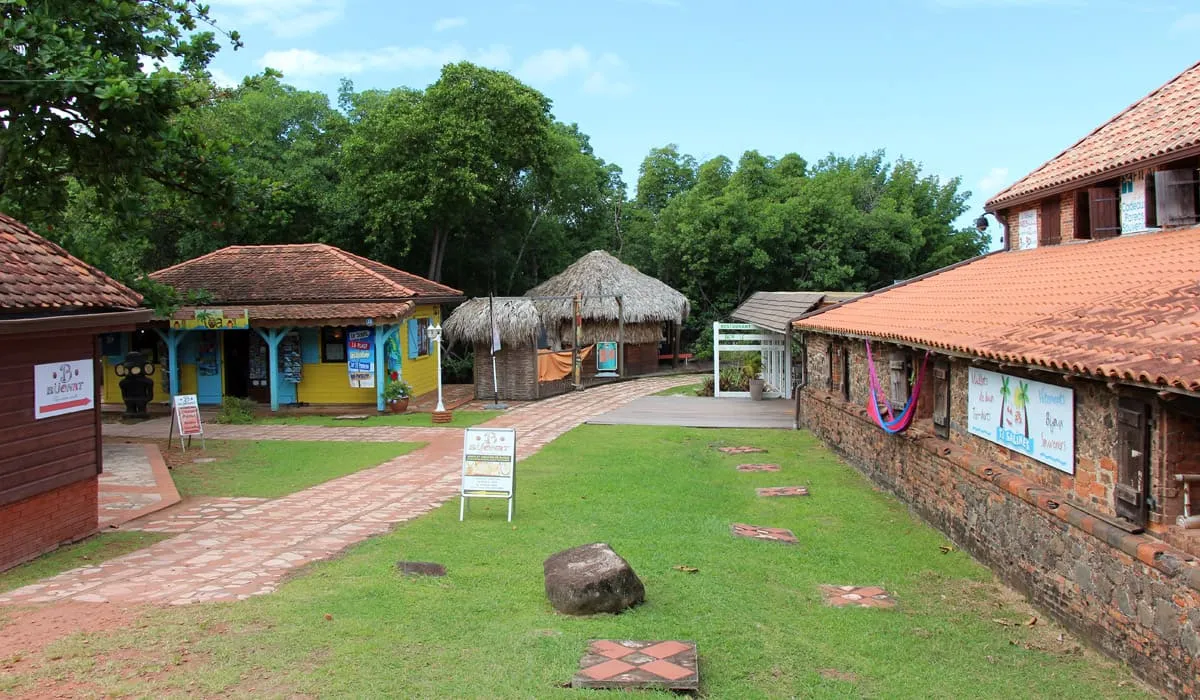
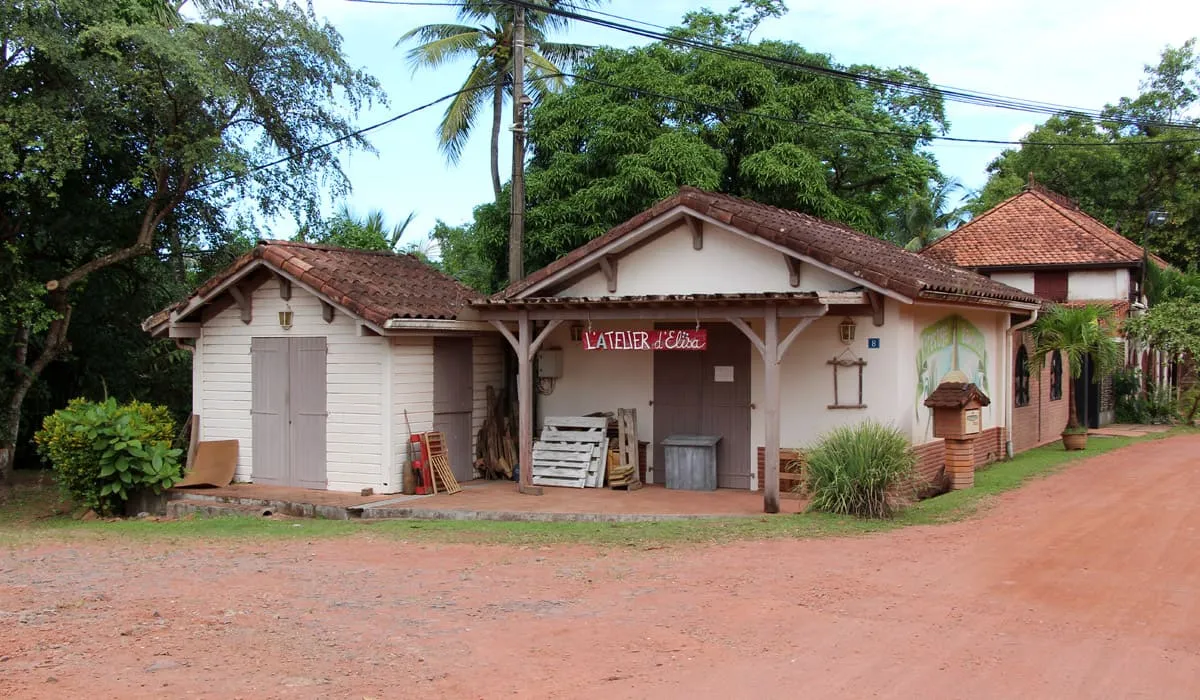
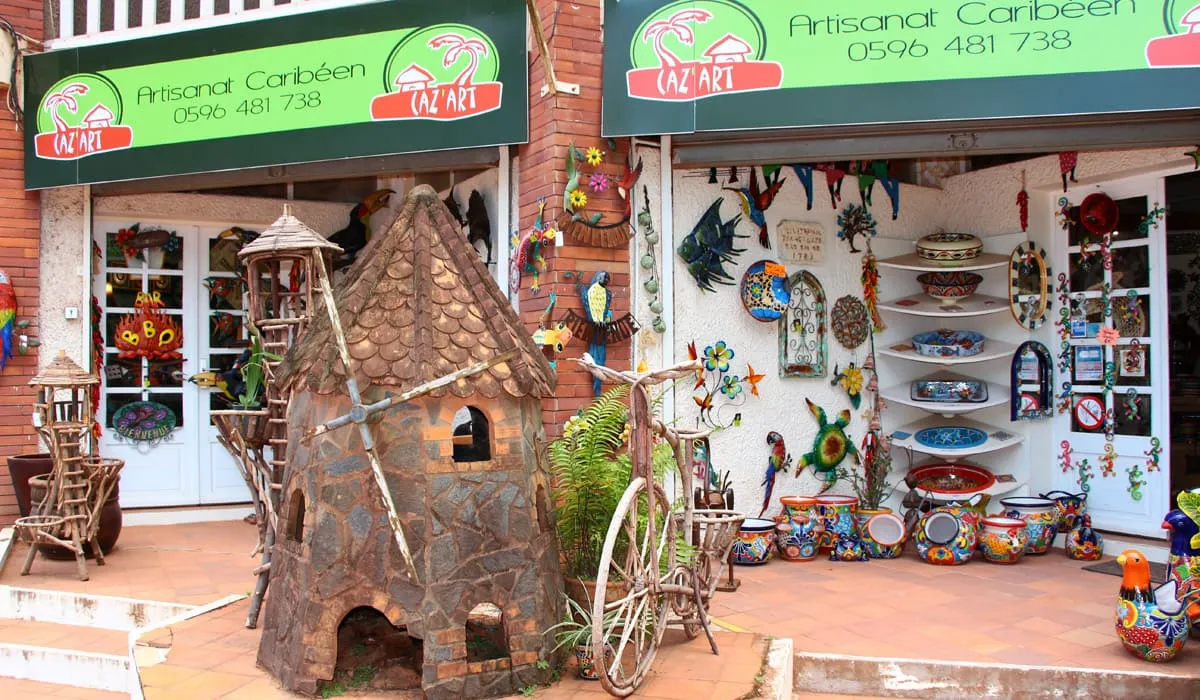
Today, the Village de la Poterie houses many historic structures and authentic Creole cottages occupied by artisans, potters, and shopkeepers, as well as one of the oldest brickworks still operating in France.

Photo gallery
Village de la Poterie Lane
Village de la Poterie
Stores in Village de la Poterie
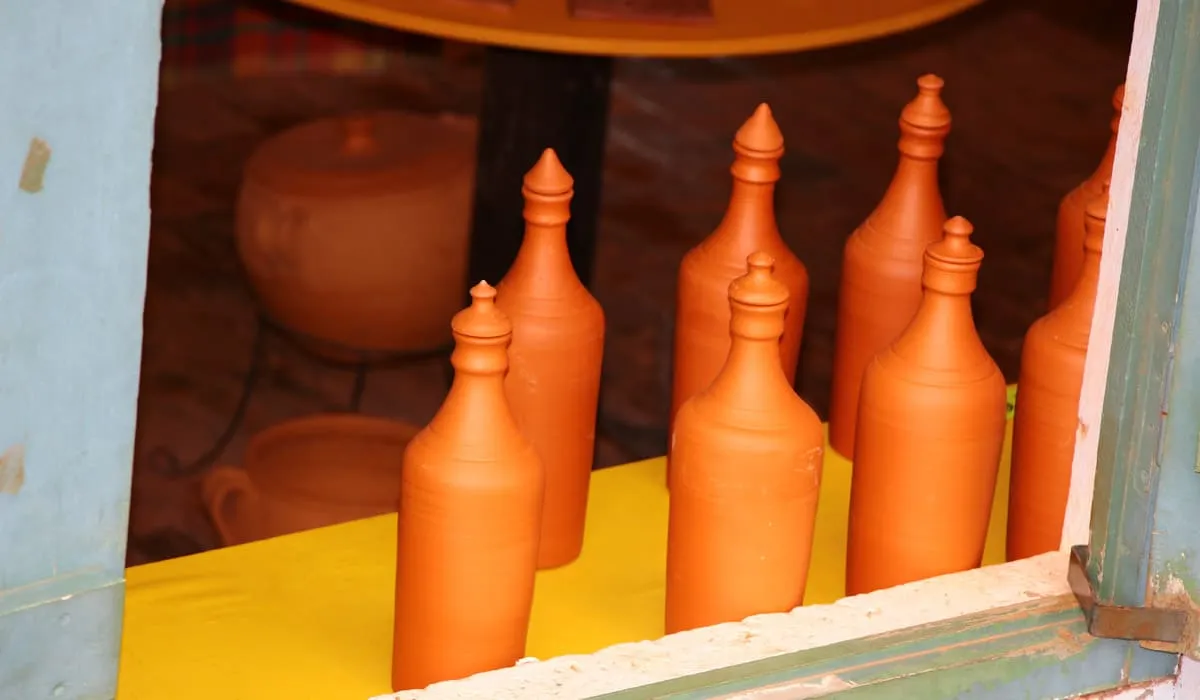
Clay vases for sale at the pottery
Red bricks
Red bricks

Depaz Distillery

On May 8, 1902, the Depaz family disappeared during the eruption of Mount Pelée, which also destroyed the town of Saint-Pierre. The only member of the Depaz family to escape the tragedy was Victor Depaz, then a young student living in Bordeaux, where he was studying. Once he had completed his studies, Victor Depaz, now an orphan and penniless, returned to Saint-Pierre to the Habitation Périnelle, where he had been born in 1886.

On the symbolic date of May 8, 1917, 15 years after the eruption, Victor Depaz bought the 521 hectares of fallow land at Habitation Pécou from the d'Aurigny family and started up the distillery he had built to crush the cane he was planting on the slopes of Mount Pelée.

He began construction of “Château Depaz,” a replica of Habitation Périnelle, where he had spent his childhood. He moved there with his wife and eight children in 1923. He would have eleven children in total.

Depaz rum won its first medal at the Marseille exhibition in 1922, then again in 1927 and 1931.

The reputation for quality of Depaz rum grew year after year under the leadership of Victor's sons, first Henri Depaz, then, from 1986, his twin brother André.

In 1989, André Depaz joined forces with the Bordeaux-based family group Bardinet, a long-standing customer of the Depaz Distillery, and continued the work begun by Victor Depaz, first with Bardinet and later with the new owner of La Martiniquaise.

Photo gallery
Depaz distillery
Depaz distillery
Depaz distillery
Depaz distillery
Parking of Depaz distillery
Mill at Depaz distillery
Depaz distillery's store
Depaz distillery
Depaz distillery
Depaz distillery
Depaz distillery
Depaz distillery
Depaz distillery
Depaz distillery
Depaz distillery
Mill at Depaz distillery
Depaz castle
Depaz castle

Trois Rivières

Trois Rivières is a distillery located in the commune of Sainte-Luce, in the district that shares its name, about 5 km from the town center. The estate spans approximately 600 hectares, including 120 hectares where sugarcane is cultivated in rotation with cattle farming. However, the distillery has not been active since 2003. The brand is now managed by the La Mauny distillery in Rivière-Pilote. A windmill is said to have once stood on the Trois Rivières site.

Trois Rivières white agricultural rum is available in 50°, 55°, and 62° proofs. These rums carry the Appellation d’Origine Contrôlée (A.O.C.) designation.

The Habitation Trois Rivières, also known as Habitation Grand Céron, was once the property of Nicolas Fouquet (1615–1680), Superintendent of Finances for the Kingdom and protégé of Cardinal Mazarin. Before his downfall and imprisonment by order of Louis XIV, Fouquet had built a sugar refinery on the site, along with an annexed distillery—remnants of which still exist today.
It was during the 19th century that the Céron estate was relocated to its current site.

Visitors can choose between a free self-guided tour and a paid guided tour that includes a tasting. There is also a boutique where guests can purchase branded items such as glassware sets, rum gift boxes, and other Trois Rivières merchandise.

Photo gallery
Trois Rivières distillery

Habitation Saint-Étienne

Habitation Saint-Étienne, or H.S.E., is a distillery built to replace an old sugar mill, La Maugée, covering more than 400 hectares from Gros-Morne to Saint-Joseph.

In 1882, the distillery was bought by Amédée Aubéry, a young captain of industry who became one of the iconic figures of the Martinican economy. Towards the end of the 19th century, faced with the sugar crisis, it was converted into a distillery, like many sugar plantations of the time.

Amédée Aubéry expanded the factory and gave it a remarkable façade with 28 arched windows, ensuring optimal ventilation of the building. He modernized the entire facility to maximize rum production efficiency.

In 1909, the distillery was bought by the Simonnet family, who developed the business until its decline in the late 1980s. In 1994, Yves and José Hayot took over the operation, relaunched the Saint-Étienne brand, and undertook the restoration and enhancement of the architectural heritage of the property.

Today, although rum distillation no longer takes place (since 1988), it continues to produce rums, known as HSE rums. Its preserved architectural ensemble is one of the best examples of the housing system in Martinique, offering a glimpse into life in the 19th century. The master's house and the former slave huts, later used by paid workers, have survived for two centuries and are open to visitors.

The site is listed in the Supplementary Inventory of Historic Monuments (I.S.M.H.). During the tour, you can see how HSE rum is produced, including the barrel storage system and bottling process, before tasting the rums made on site. Numerous exhibitions are held there throughout the year.

Photo gallery
Pink flowers at Habitation Saint-Étienne
Entrance to the Habitation Saint-Étienne
Red flower at Habitation Saint-Étienne
Main house at Habitation Saint-Étienne
Production of aged rum at Habitation Saint-Étienne

Maison La Mauny

The La Mauny distillery was founded in 1749. It takes its name from Count Ferdinand Poulain, the Count of Mauny, who settled in Martinique in the early 18th century. Originally, the La Mauny estate was dedicated to sugar production, but it successfully weathered the sugar crisis by shifting toward the production of agricultural rum around the mid-20th century.

The property was acquired by brothers Théodore and Georges Bellonnie. In the 1970s, Théodore Bellonnie partnered with the Bourdillon families to form the Rhums La Mauny company. The company was renamed Bellonnie Bourdillon et Successeurs (BBS), which also owns the Trois Rivières and Duquesne brands.

Since then, Trois Rivières and Duquesne rums have been produced at the La Mauny distillery. During the guided tour, you’ll discover how La Mauny’s various rums are made, from fresh cane juice to bottling. A tasting of different rums and punch varieties is also offered.

At the end of the tour, you can visit the shop to purchase rum or brand-related products from La Mauny, Trois Rivières, and Duquesne. You’ll also find punch made with La Mauny’s different rums.

To get there, head toward Rivière-Pilote via the N8. Signage will guide you to the distillery from there.

Photo gallery
La Mauny distillery
La Mauny distillery
La Mauny distillery
La Mauny distillery
La Mauny distillery
La Mauny distillery
La Mauny distillery
La Mauny distillery
La Mauny distillery
La Mauny distillery

La Favorite Distillery

La Favorite distillery was born in 1842 between Fort-de-France and Lamentin under the name of "Distillery Jambette", named after the river that fed it.

Its name was changed in 1851 by its owner, Charles Henry, in reference to an anecdote. Indeed, Joséphine de Beauharnais would have offered a bottle of rum from Habitation Jambette to Napoleon at the beginning of the First Empire, and she would say "This is my favorite liquor".

The estate has belonged to the Dormoy family for three generations. The estate, which has experienced ups and downs in its history due to periods of prosperity followed by more difficult times, was even a sugar factory at one point before becoming a distillery again.

Today, La Favorite is one of the last remaining family-owned and independent distilleries. It offers a wide variety of rums, including white rum, amber rum, and aged rum.

Photo gallery
Entrance sign to La Favorite distillery
Indication of the La Favorite distillery
Start of the tour of La Favorite distillery
Production machine at La Favorite distillery
Production tank at La Favorite distillery
Souvenir from La Favorite distillery
Entrance to the La Favorite distillery shop
Souvenirs from the La Favorite distillery shop
Bottles for sale from La Favorite distillery

Savane des esclaves

Located in the rural area of Trois-Ilets in the La Ferme neighborhood, Savane des Esclaves is a 2-hectare park created by Gilbert Larose.

Without any financial assistance and on his own initiative, Gilbert Larose first cleared the area and rebuilt an “Antan Lontan” village, complete with dwellings and the lifestyle of the “nèg-mawon,” slaves who had fled the plantations to take refuge on the hills and lived independently.

He also planted bananas, Chinese cabbage, sweet potatoes, and cassava. The guided tour lasts about an hour. It will take you back in time to discover Martinique's past and traditions.

During this guided tour, you will see wooden huts, medicinal plants, gardens, and birds, as well as a small museum dedicated to slavery. Activities (cassava and cocoa making, tastings, and concerts) are regularly offered on the theme of slavery and Martinique's past.

A shop sells the farm's produce, and to delight the little ones, they can buy ice cream and fruit juice there.

To get there, head towards Les Trois-Ilets and then follow the signs.

Photo credit: https://www.lasavanedesesclaves.fr
Photo gallery
Wooden hut in the Slave Savannah
Slave village at the Slave Savannah

Banana Museum

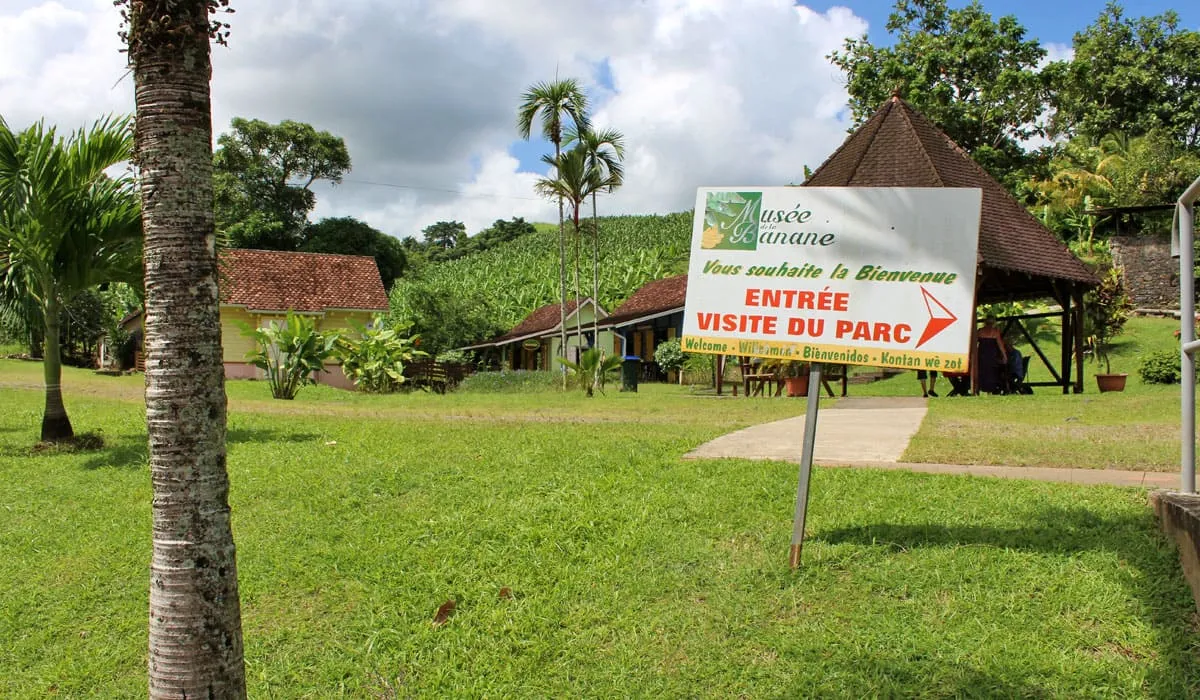
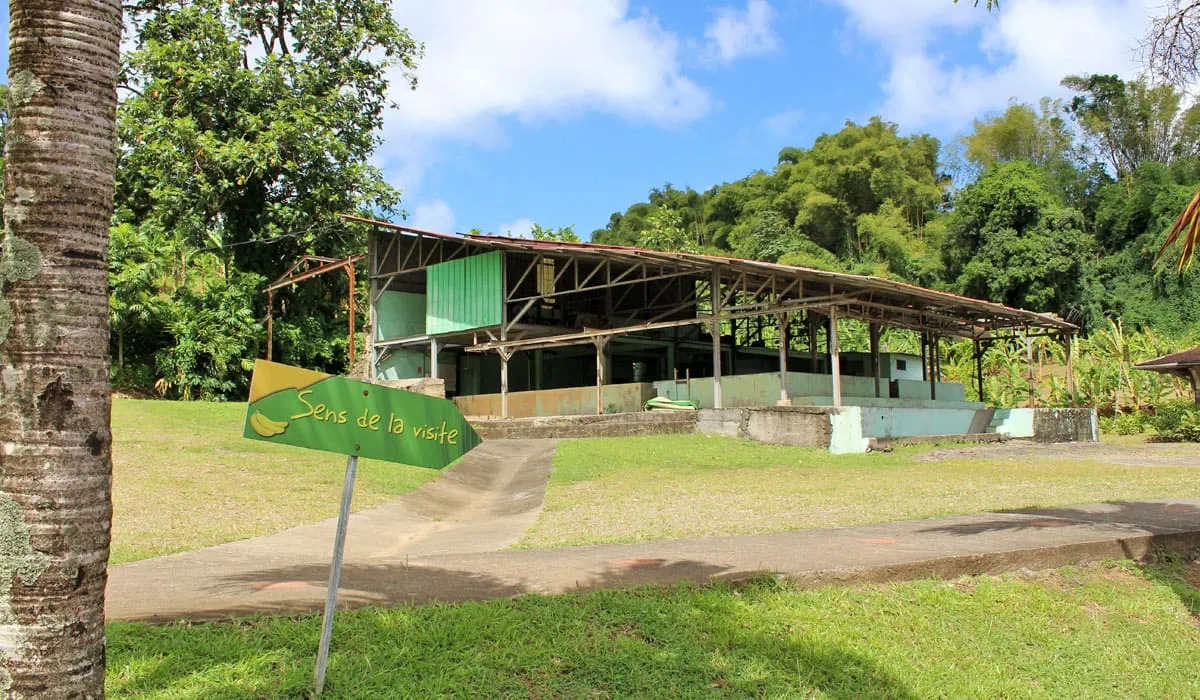
Located in a lush green setting, the Banana Museum sits within the “Limbe” plantation, a banana estate in the town of Sainte-Marie. During your visit, you'll explore the history of the banana—from its introduction to the Caribbean during 16th-century colonization to its role today.

The museum showcases over 65 banana species out of the 300 recorded worldwide, spread across a scenic 4-hectare trail.

You’ll also discover fascinating insights into the world’s favorite fruit: its origins, cultivation techniques, culinary uses, and more.

On-site, the restaurant “La Bananeraie” invites you to enjoy inventive dishes where bananas take center stage.

Occasional exhibitions are also held, celebrating the banana in all its cultural and botanical richness.

Photo gallery
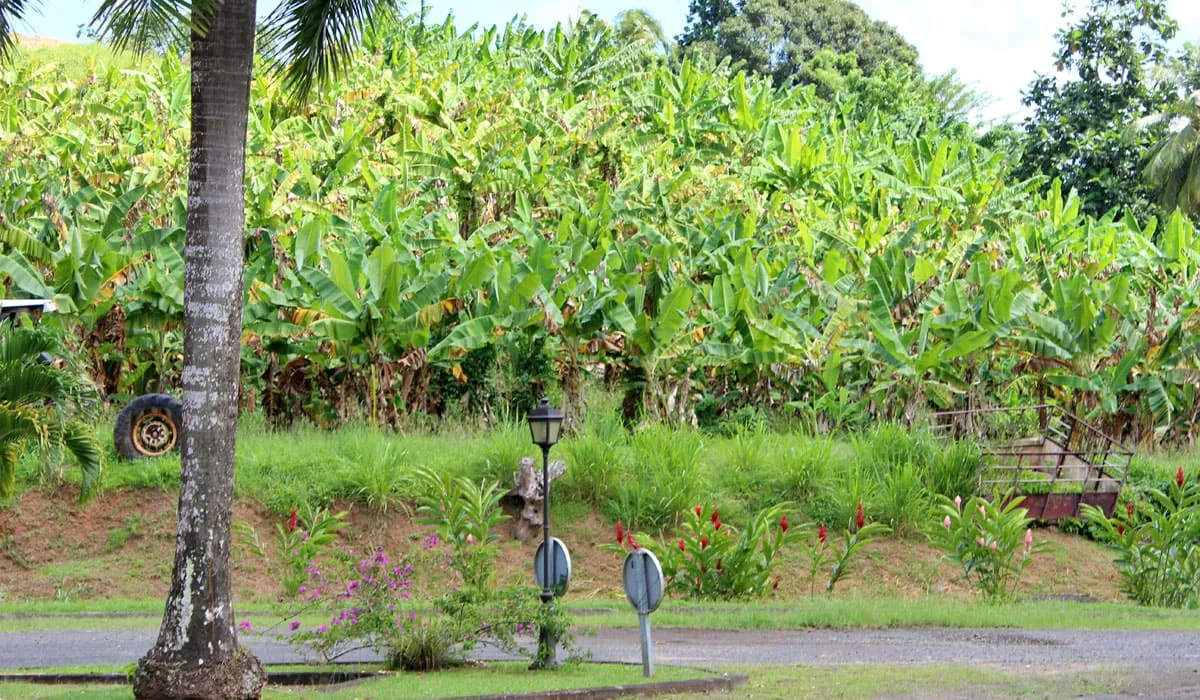
Banana plantation at the Banana Museum
Banana Museum
Banana Museum
Banana Museum
Banana Museum
Banana Museum
Banana Museum
Banana Museum
Banana Museum