
Start of the War
Causes of the Conflict
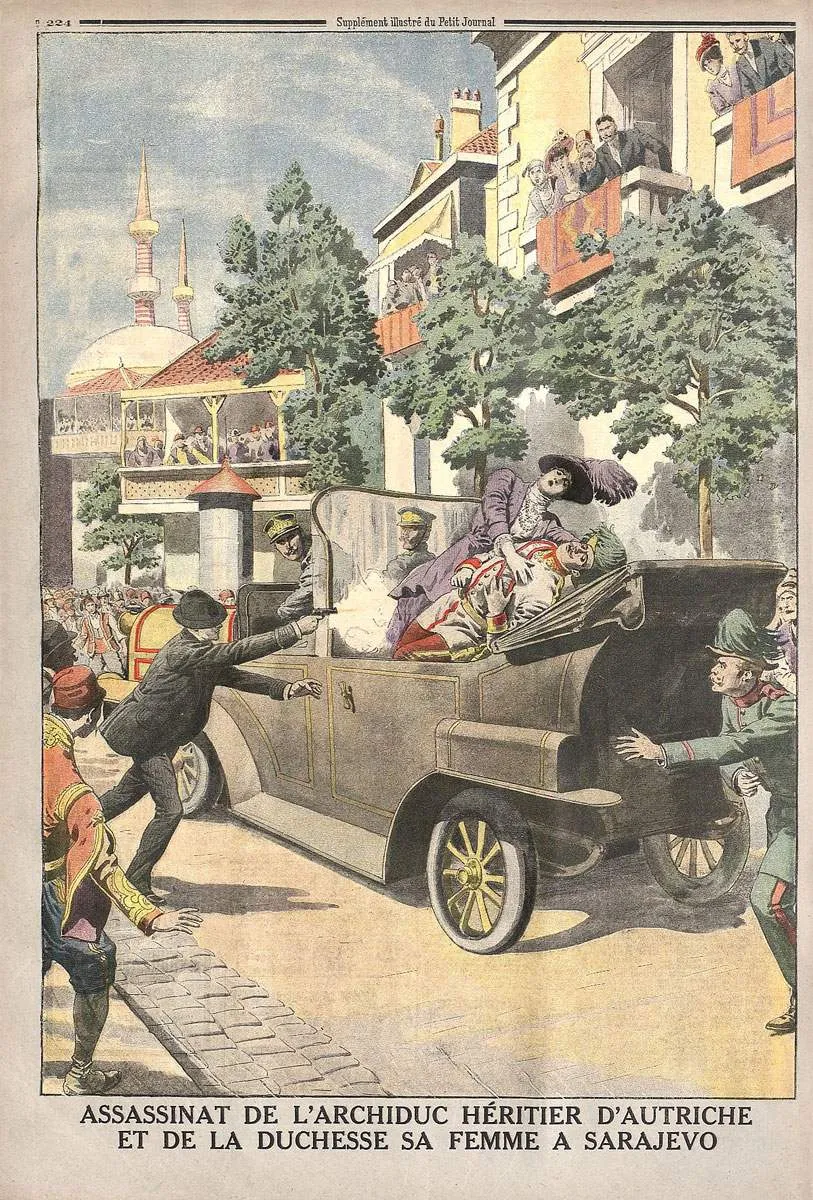
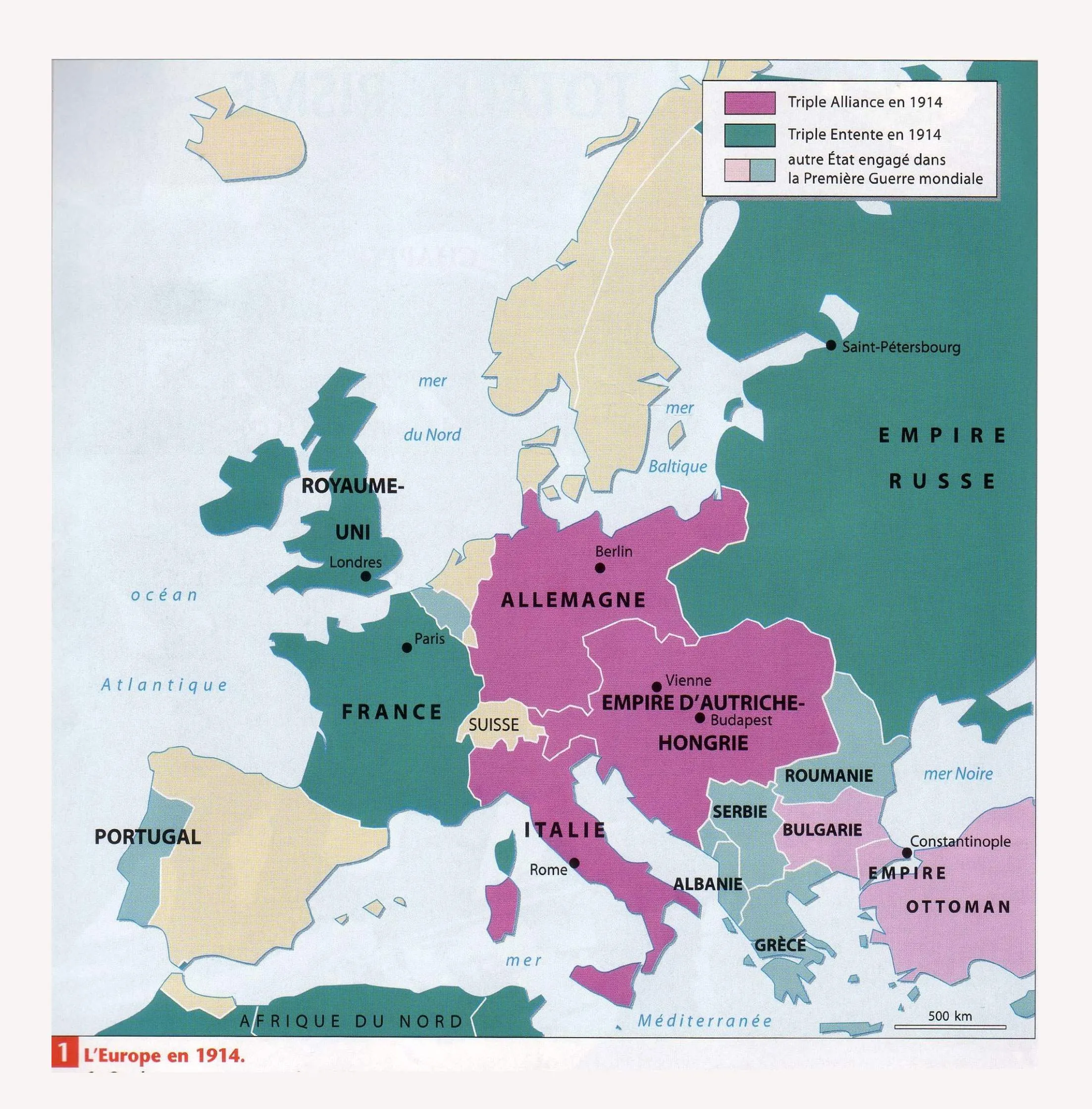
There were many causes of the war. They were political, economic, and social. The direct cause was the assassination of Archduke Franz Ferdinand of Austria-Estonia in Serbia on June 28, 1914. While tensions were high between the dual monarchy of Austria-Hungary and Serbia, the European powers united into two major blocs: the Triple Alliance or Triplice and the Triple Entente.
The Triple Alliance included the German Empire, the Austro-Hungarian Empire, and the Kingdom of Italy, while the Triple Entente included France, the United Kingdom, and Imperial Russia. Serbia and Montenegro were allies of Russia.
On the one hand, France wanted revenge against Germany after losing Alsace-Lorraine in the War of 1870. They had refocused all their energy on their colonial empire but were ready to confront the Germans and recover the region that was once part of France.
The Germans, through their Imperial Chancellor Otto von Bismarck, one of the most powerful men in Europe, secretly envied France and the United Kingdom, which were “dividing up Africa.” They too wanted a piece of the pie, but without upsetting the British. The Russians played a predominant role in the Balkans, and Austria-Hungary, then a powerful empire, rejected Russian ambitions in the area. Thus, the Austro-Hungarians joined forces with Germany to protect themselves in the area, breaking off all diplomatic relations with France.
When France seized Tunisia, a former Italian colony, in 1881, the Italians joined forces with the Germans and Austro-Hungarians. The Triple Entente was created through bilateral agreements between France and Russia, France and the United Kingdom, and then Russia and the United Kingdom. These tensions led each country to prepare for conflict.
The climax of the war was the assassination of Archduke Franz Ferdinand of Austria and his wife by a Serbian nationalist, which marked the start of the war on June 28, 1914. On July 23, Austria-Hungary concluded that Serbia had orchestrated the double assassination, and five days later, the dual monarchy declared war on Serbia. On July 30, Russia, Serbia's ally, decreed general mobilization.
Austria-Hungary, in turn, decreed general mobilization on July 31.
On August 1, France and Germany mobilized. On August 2, Germany invaded Luxembourg and issued an ultimatum to Belgium. The next day, they declared war on France and Belgium, which had rejected the German ultimatum.
On August 6, Austria-Hungary declared war on Russia. From August 7 to 10, France attempted to recover Alsace and Lorraine.
On August 11 and 12, France and the United Kingdom declared war on Austria-Hungary. After entering Brussels on August 20, they arrived in France two days later. This marked the beginning of the war for the French troops.