History
Turmeric, whose scientific name is Curcuma longa, is also known as Indian saffron. It is a perennial rhizomatous herb native to South Asia. It arrived in Martinique with the Indian indentured laborers who came to work on the plantations after the abolition of slavery, starting in 1853. Today, turmeric is found throughout all tropical regions of the world.
Varieties
There are several varieties of turmeric. Some have not yet been tested in cooking, and their effects on health remain unknown.
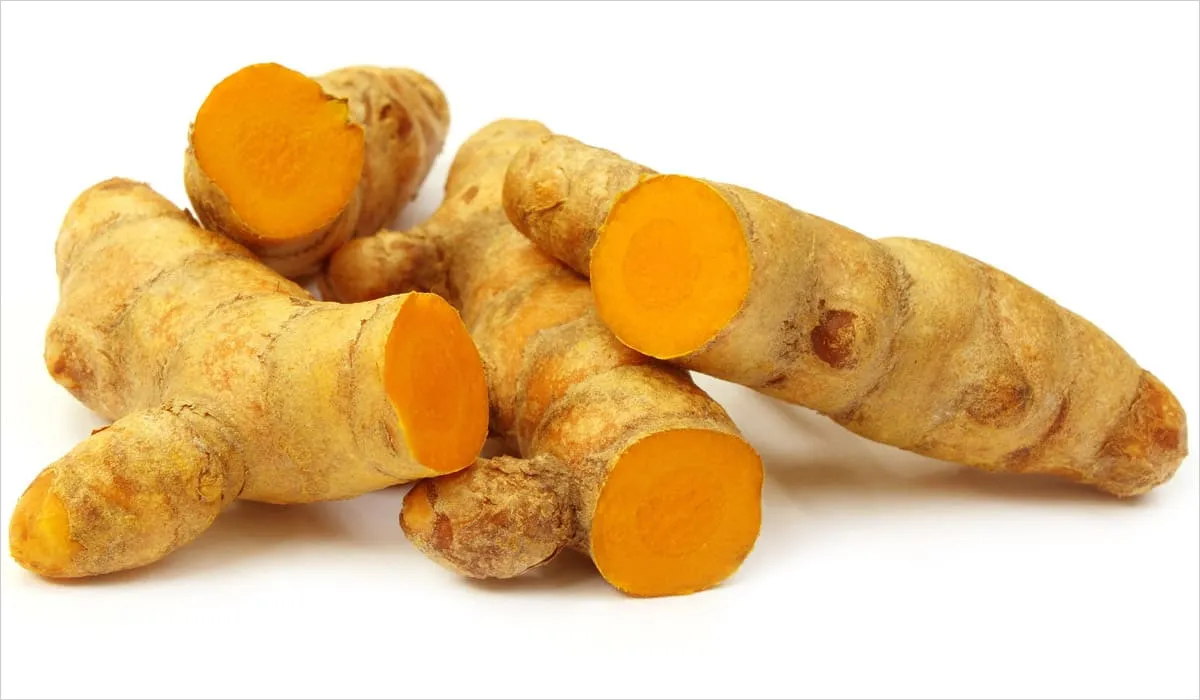
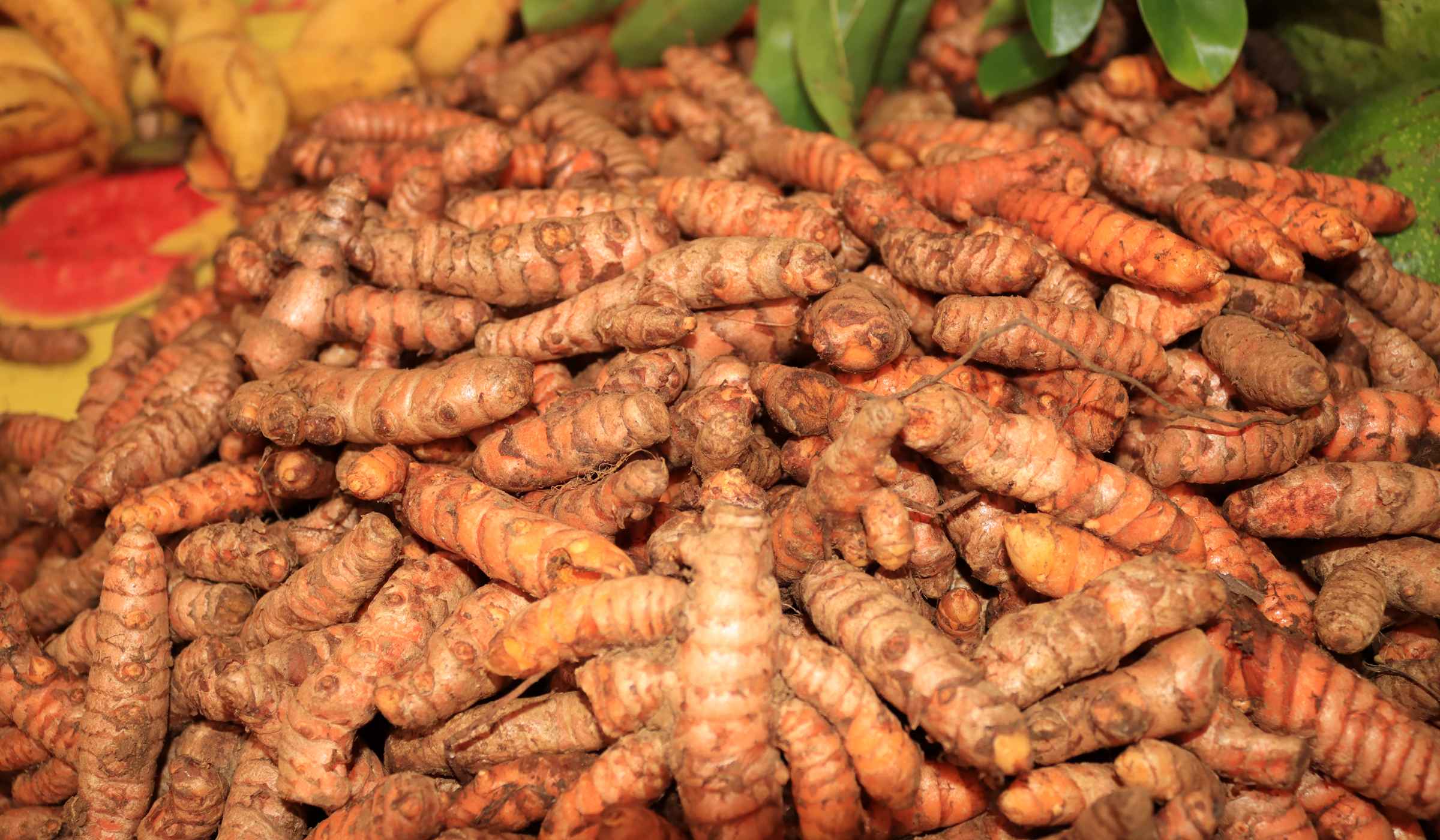
Turmeric is a perennial herb with short stems that can reach up to 1 meter in height. It has numerous aromatic rhizomes, which are ellipsoid or cylindrical, and are yellow to orange on the inside. From the outside, turmeric looks very similar to ginger, but the interior color differs, ginger being more white or beige.
Its broad leaves, oblong or elliptical and lanceolate, are arranged alternately in two rows. Its flowers are sterile. Turmeric does not tolerate waterlogged soils, requires abundant sunlight, and thrives in very fertile soil. It is particularly well adapted to regions with monsoon climates and heavy rainfall.
Medicinal properties
Turmeric is renowned for its digestive properties, but is also described as having antibiotic and antiseptic qualities. It is said to protect against hepatitis, help combat digestive disorders, Crohn’s disease, and high cholesterol. It is attributed with anti‑inflammatory and anti‑cancer properties, and is used against various joint problems such as rheumatism, osteoarthritis, and arthritis.
It is believed to help prevent the formation of tumors and metastases. It may slow aging processes in the brain and help fight the onset of Alzheimer’s disease. It is also said to accelerate wound healing, protect against lung problems and fibrosis, and ease biliary, gastric, and intestinal issues.
Uses
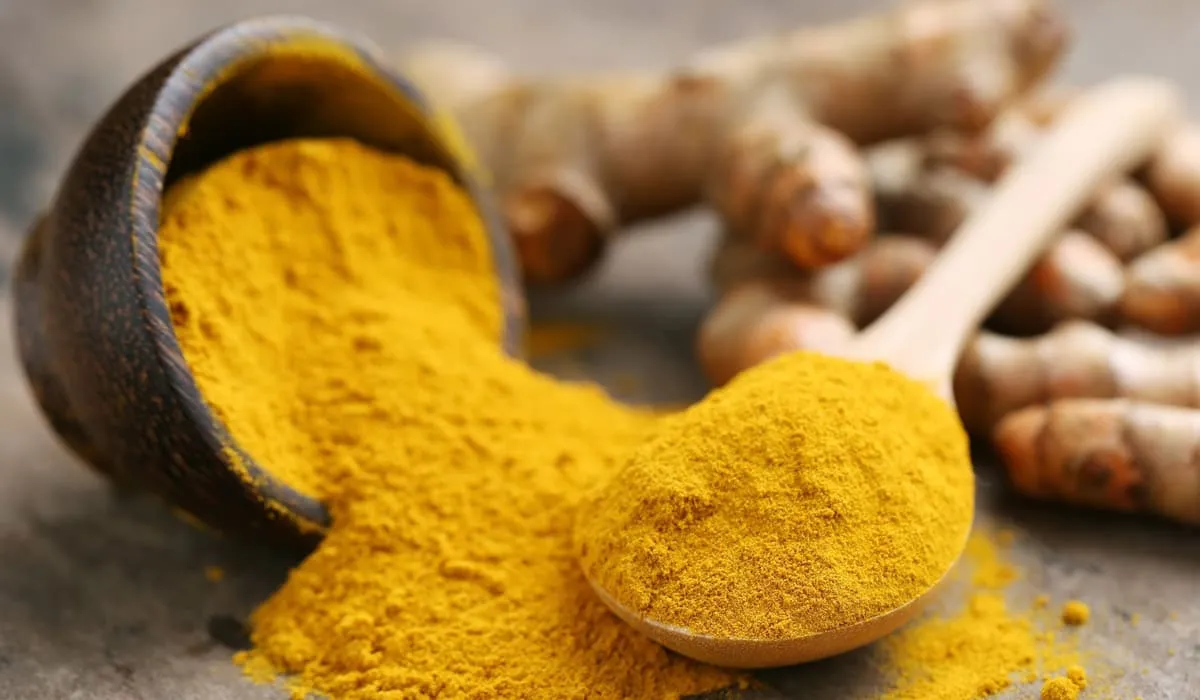
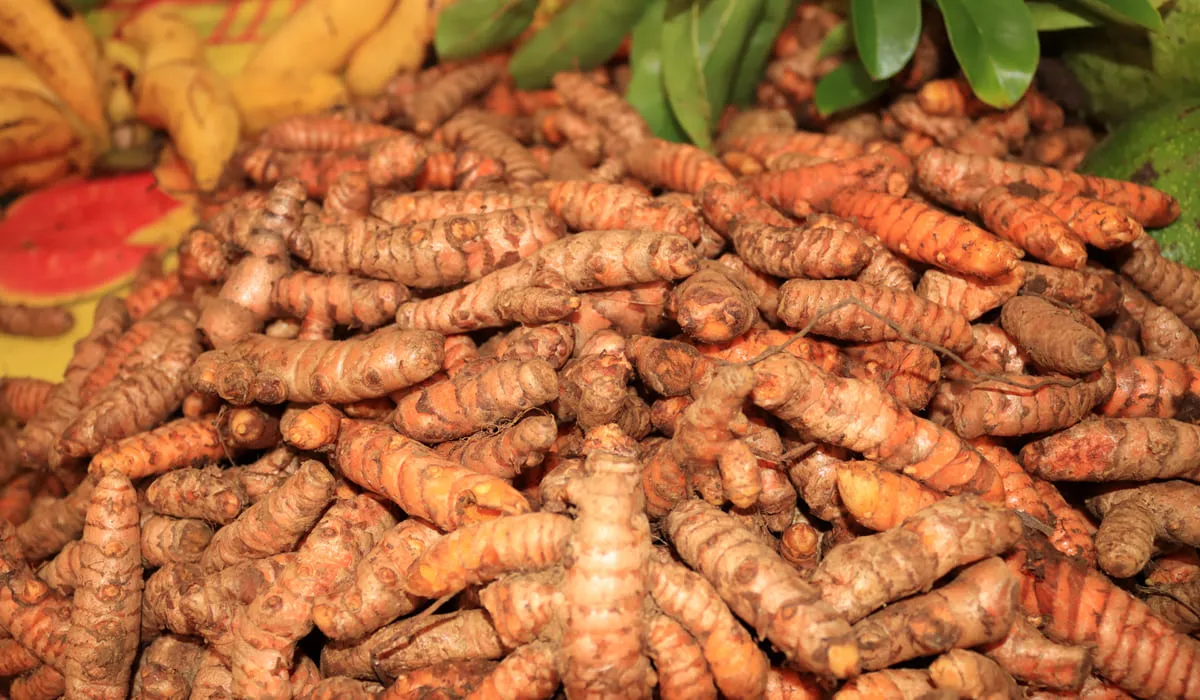
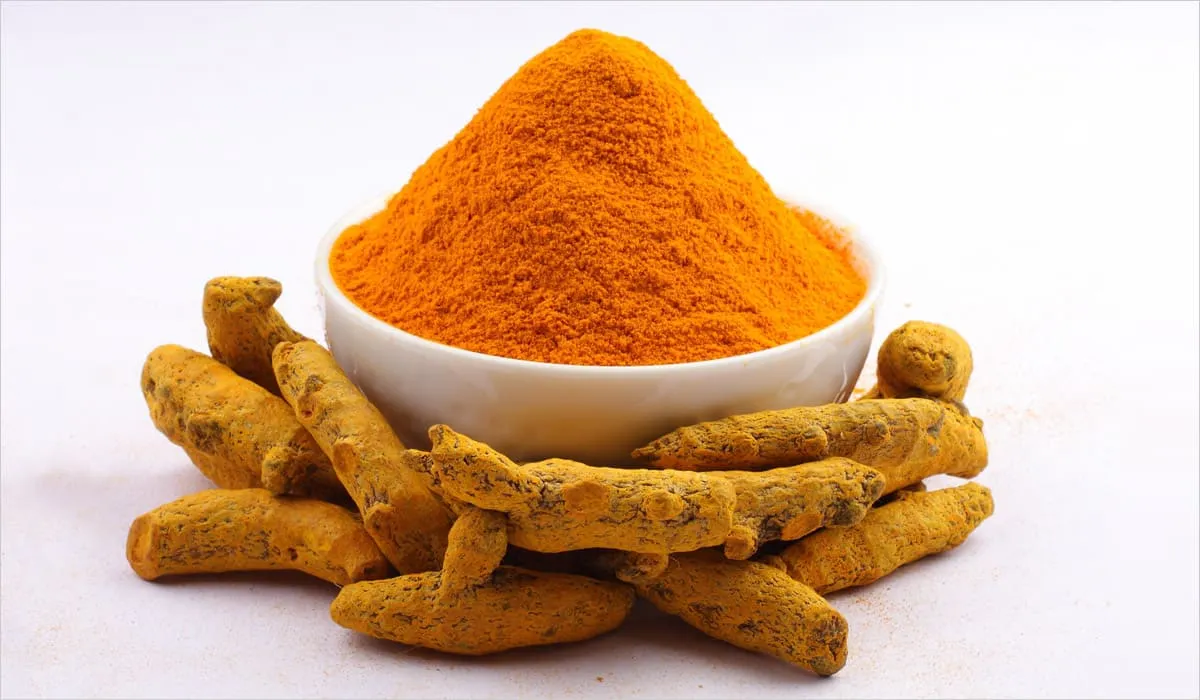
Turmeric is sold mainly in powdered or dried form. Fresh turmeric can also be found in markets across the island, especially in Fort‑de‑France.
It is used primarily in cooking meats, fish, or shellfish, giving sauces a characteristic yellow color. It can also be used to flavor rice or legumes. Turmeric is a major component of curry.