History
Tamarind, whose scientific name is Tamarindus indica, originates from the savannas of tropical Africa. However, because it had been cultivated in India for a very long time, many people believed it came from Southeast Asia, particularly India.
Its name comes from an Arab traveler returning from India who, in 1355, called it “al‑tamar‑al‑Hindi”, meaning the date of India. From this expression, the word “tamarind” eventually emerged.
The Arabs later introduced it to Europeans. The Spanish brought it to the Caribbean in the 17th century, which is likely when it arrived in Martinique.
Varieties
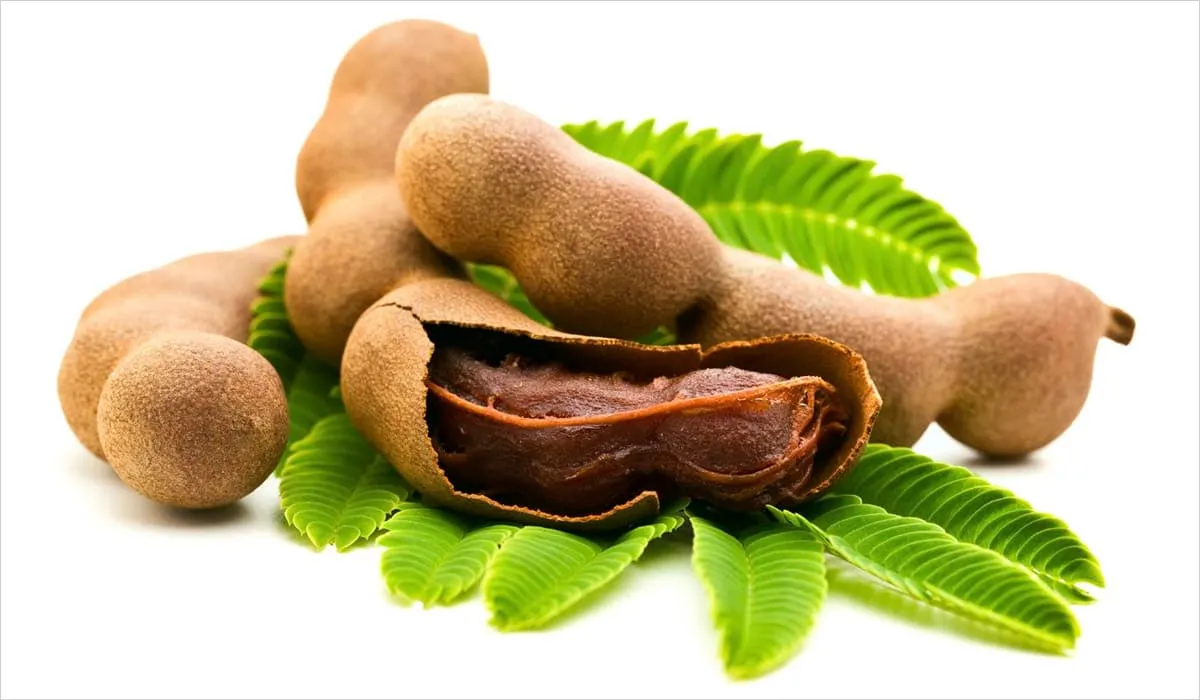
The number of tamarind varieties is unknown. When ripe, the tamarind pod has a brown shell, straight and slightly curved. It remains firm until pressed between the fingers. Inside, it contains a brown pulp that can be sweet but is most often acidic or very acidic, threaded with fine fibers. Shiny black seeds are embedded within. The pod measures between 7 and 20 cm.
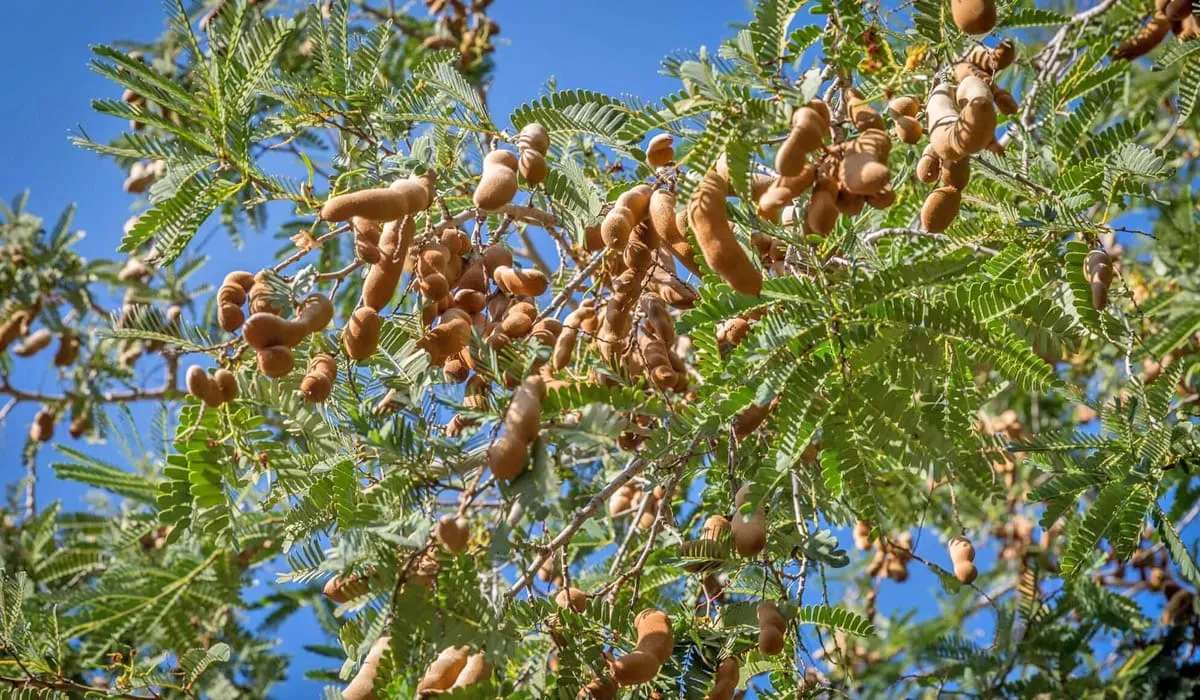
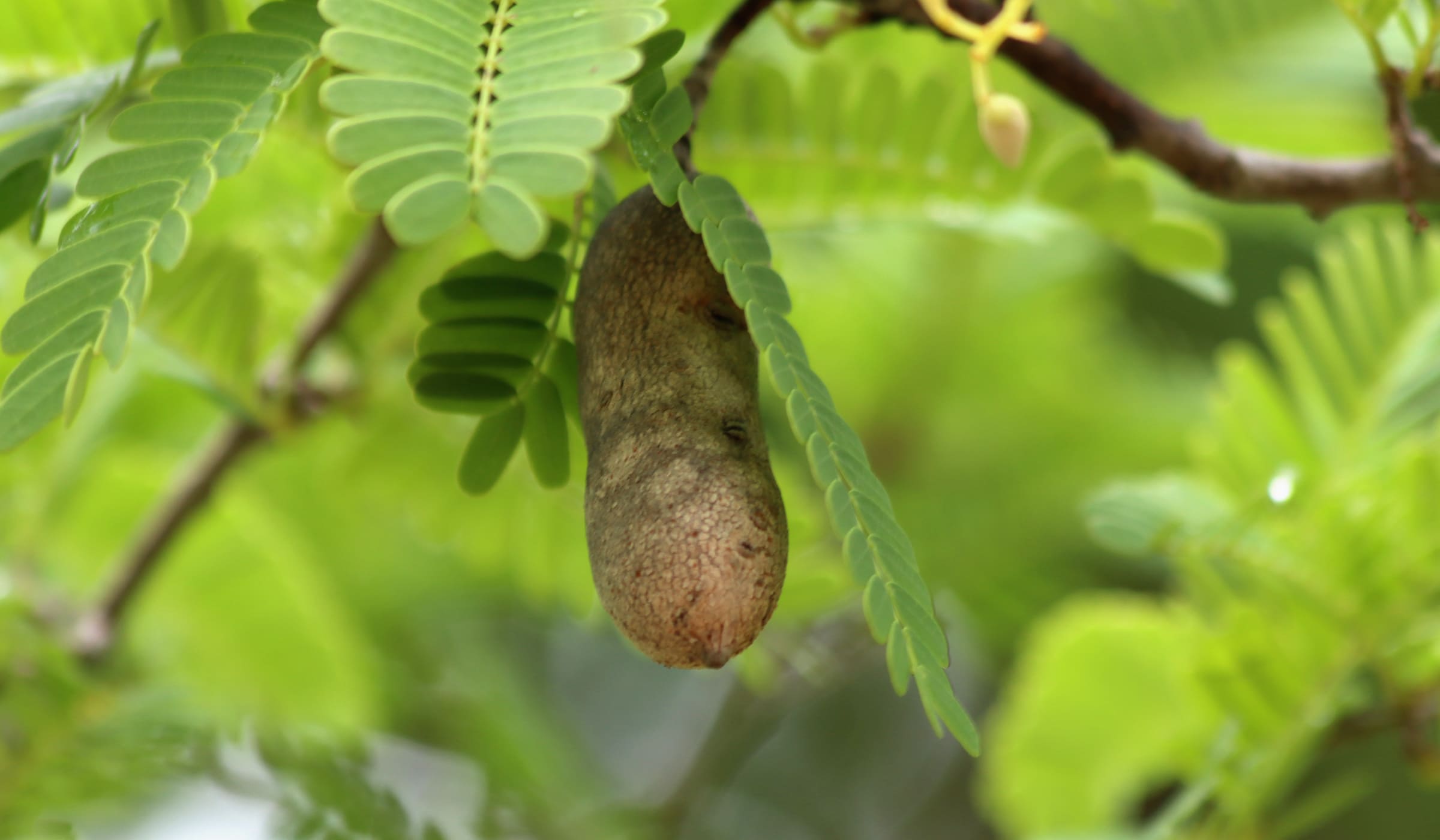
The tamarind tree develops a dense, rounded crown of tender green foliage and can reach up to 20 meters in height. In the Antilles, it is often found along volcanic‑sand beaches, which is why it is commonly called “tamarin du bord de mer” (seaside tamarind).
Medicinal properties
Tamarind has laxative and astringent properties, making it ideal for preventing constipation and treating infections. The fruit is used in certain medications designed to ease intestinal transit during anti‑cancer treatments.
It is carminative and anti‑infectious, and it helps relieve intestinal issues such as bloating, flatulence, and diarrhea.
As an antiseptic, tamarind soothes urinary problems (including cystitis).
For respiratory issues, it is used as an expectorant in cases of bronchitis.
Thanks to its antioxidants, it is also recommended for preventing cellular aging.
With its bactericidal, healing, and antifungal properties, tamarind is used to treat various skin problems: wounds, infections, and superinfected dermatoses.
In dentistry, it helps relieve mouth ulcers and gingivitis, and it is useful during teething in infants.
It can also be used to soothe sore throats.
Uses
Tamarind is eaten fresh when sweet; otherwise, it is used to make juice, jam, syrup, or punch in Martinique. When sour, it is candied. It can also be cooked with meat.
Around the world, tamarind is widely used. For example:
- It is made into cold infusions.
- In India, it is used in several masalas.
- In West Africa (Niger, Burkina Faso, Mali), it is made into syrup.
- In Madagascar, it is turned into a frozen treat.
Green tamarind is used to acidify the Colombo sauce.
Tamarinds sold by “Chinese” grocers in mainland France generally come from Thailand.