History
The vavangue, whose scientific name is Vangueria madagascariensis, originates from Madagascar and is widespread throughout the Indian Ocean region, where it is known as vavangue, as well as in East Africa. It was likely introduced to the island around the 18th century and is now cultivated more extensively in Guadeloupe.
In the French Caribbean, the fruit is commonly called tamarin des Indes (Indian tamarind) and in some English‑speaking islands as Spanish tamarind, a name that can be misleading: despite the similarity, it is not related to true tamarind (Tamarindus indica). For clarity, the most accurate English names for Vangueria madagascariensis are Madagascar tamarind or vavangue.
Varieties
There is only one variety of Indian tamarind, and it has no botanical connection to true tamarind.
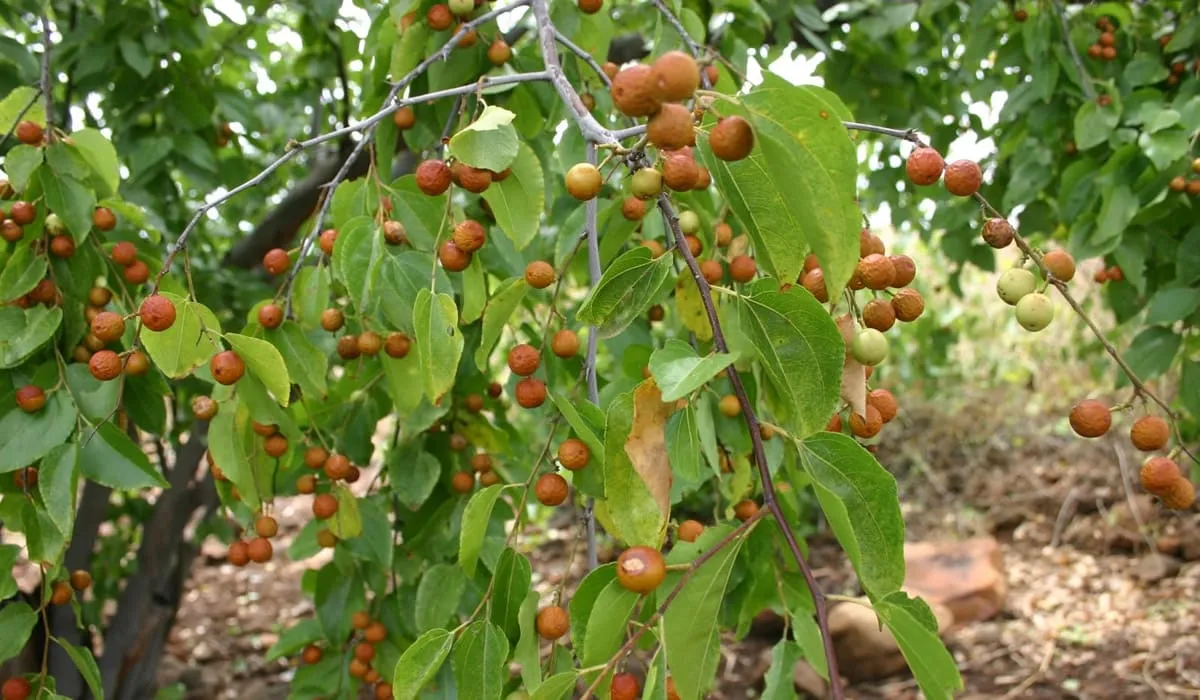
The Indian tamarind tree is a shrub measuring 2 to 5 meters in height. It tolerates drought very well and can withstand temporary lack of water. However, it cannot survive outside tropical regions, as it does not tolerate frost.
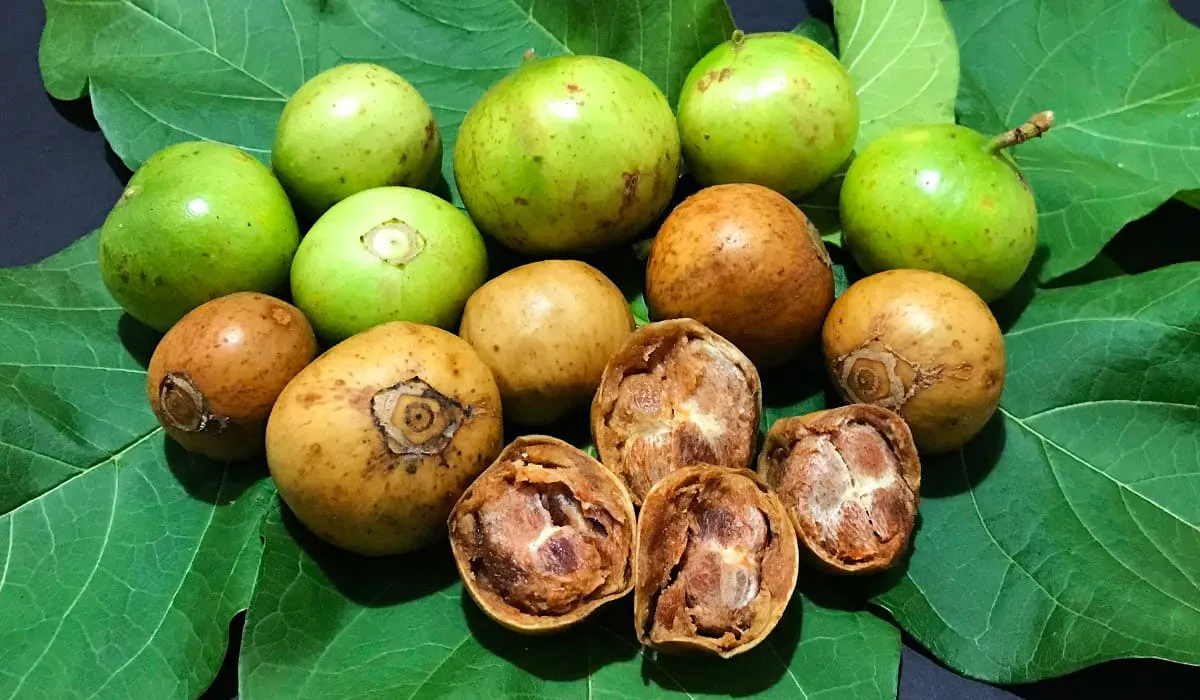
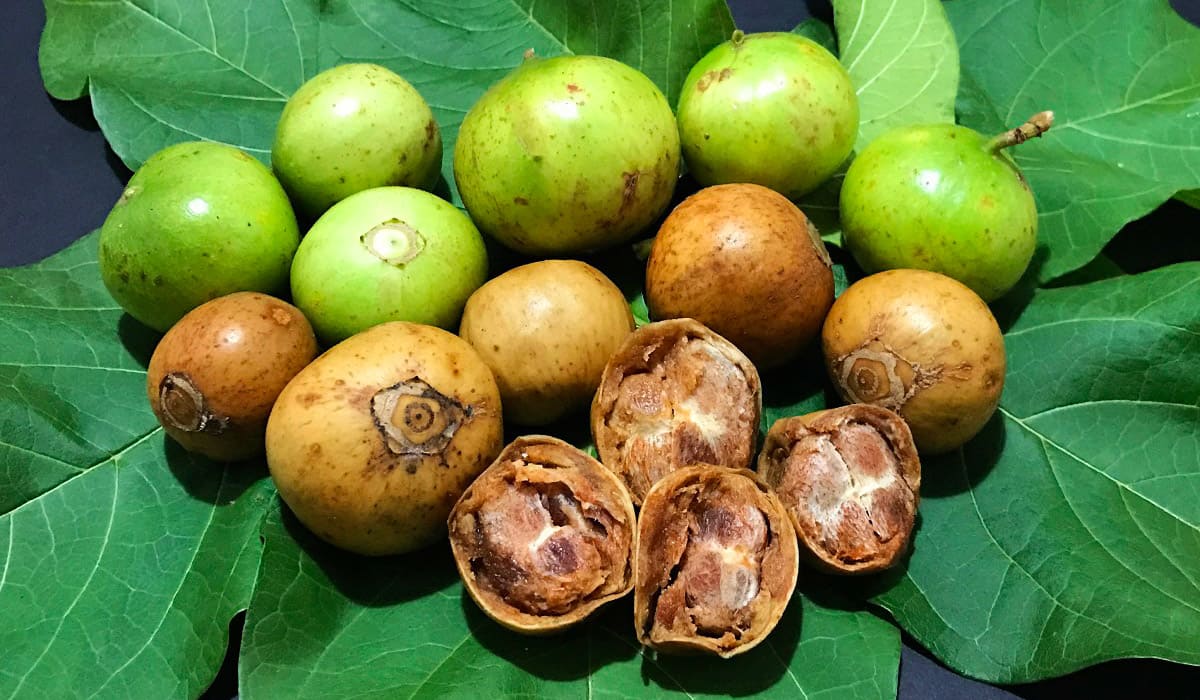
The shrub has branches growing in all directions and rarely forms a single trunk. Its leaves are broad and oval. Small yellow‑greenish flowers give rise to clusters of round fruits about 4 to 5 cm in diameter. Harvesting takes place between March and July. The fruit, initially green, turns ochre‑brown and wrinkles when ripe and ready to eat. It contains 4 to 5 seeds. Only the inner part, a brown, pasty pulp, is edible.
Medicinal properties
The fruit has many virtues, including helping with joint problems and digestion. Excessive consumption may have a laxative effect.
It is recommended for issues related to joints, digestion, and the liver. It is also said to promote weight loss, relaxation, and healthy blood circulation.
Uses
Indian tamarind tastes like a sweet and tangy applesauce. The fruit is generally eaten raw, but it can also be made into juice or compote.