History
The sapote, whose scientific name is Diospyros digyna, originates from Latin America, specifically the coasts of Mexico and Central America. It later spread throughout the Caribbean and the entire tropical zone. It is rare in Martinique, but does exist there. It is cultivated only in Mexico and Guatemala.
Varieties
There are several varieties of black sapote trees. In the Antilles, including Martinique, there is an endemic species (Diospyros revoluta) distinguished by its oval-tipped leaves and its smaller fruit with a blackish skin containing 2 to 4 seeds.
The black sapote tree, also called bois noir, has a tall trunk and a wide crown, with tiered green foliage reaching up to 25 meters in height. Its brown branches bear alternate, leathery, elliptical, pointed leaves.
What makes this tree unique? It bears male flowers, female flowers, and leaves of both sexes at the same time.
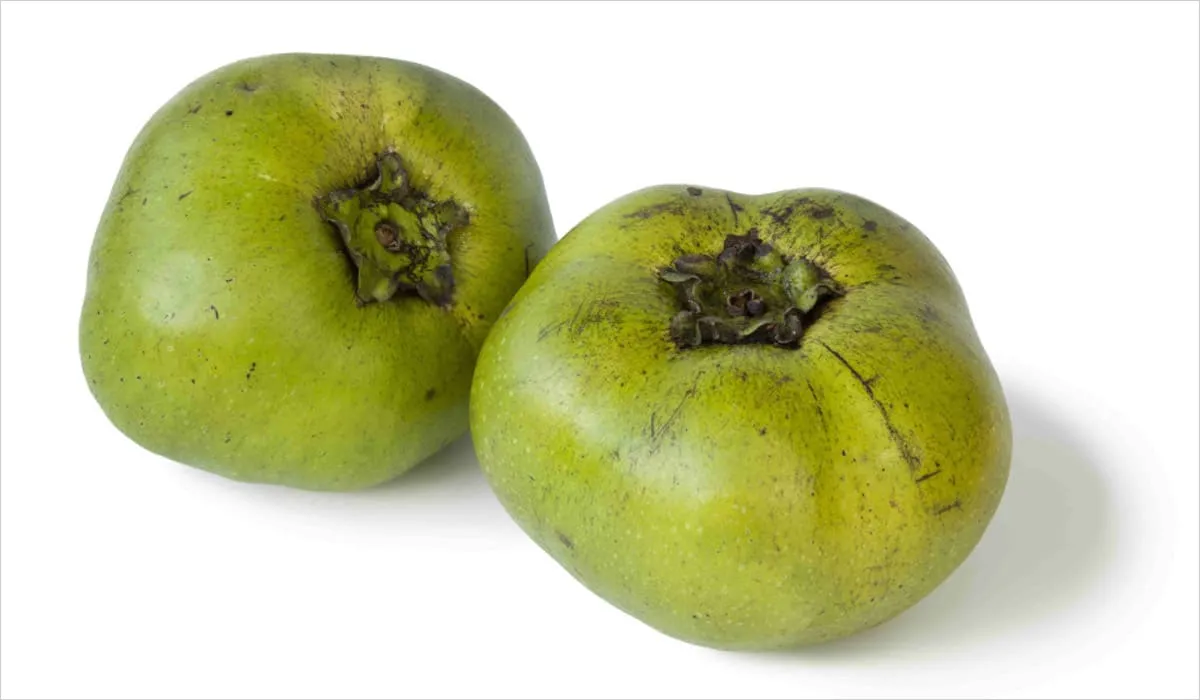
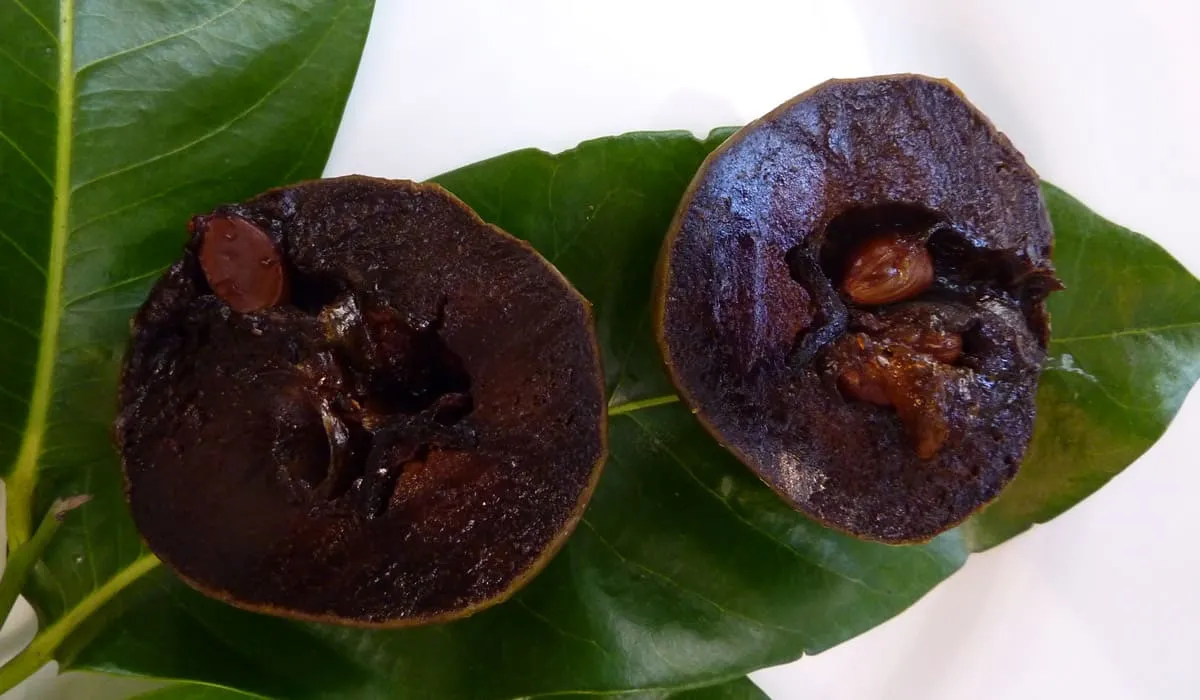
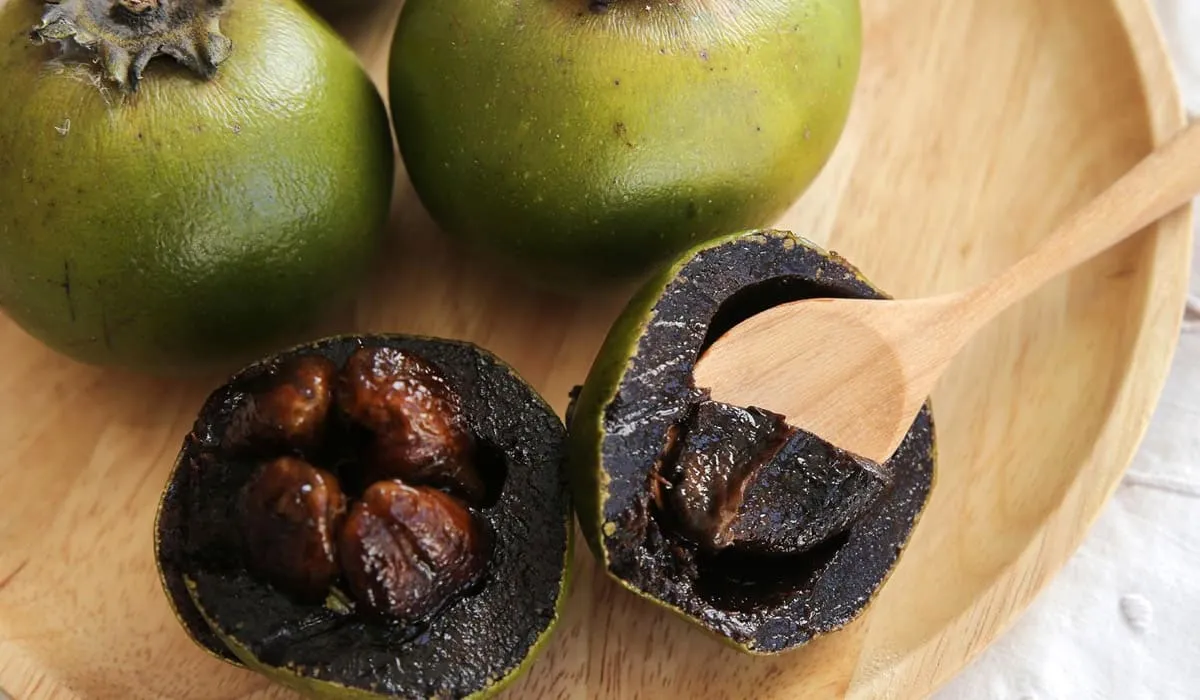
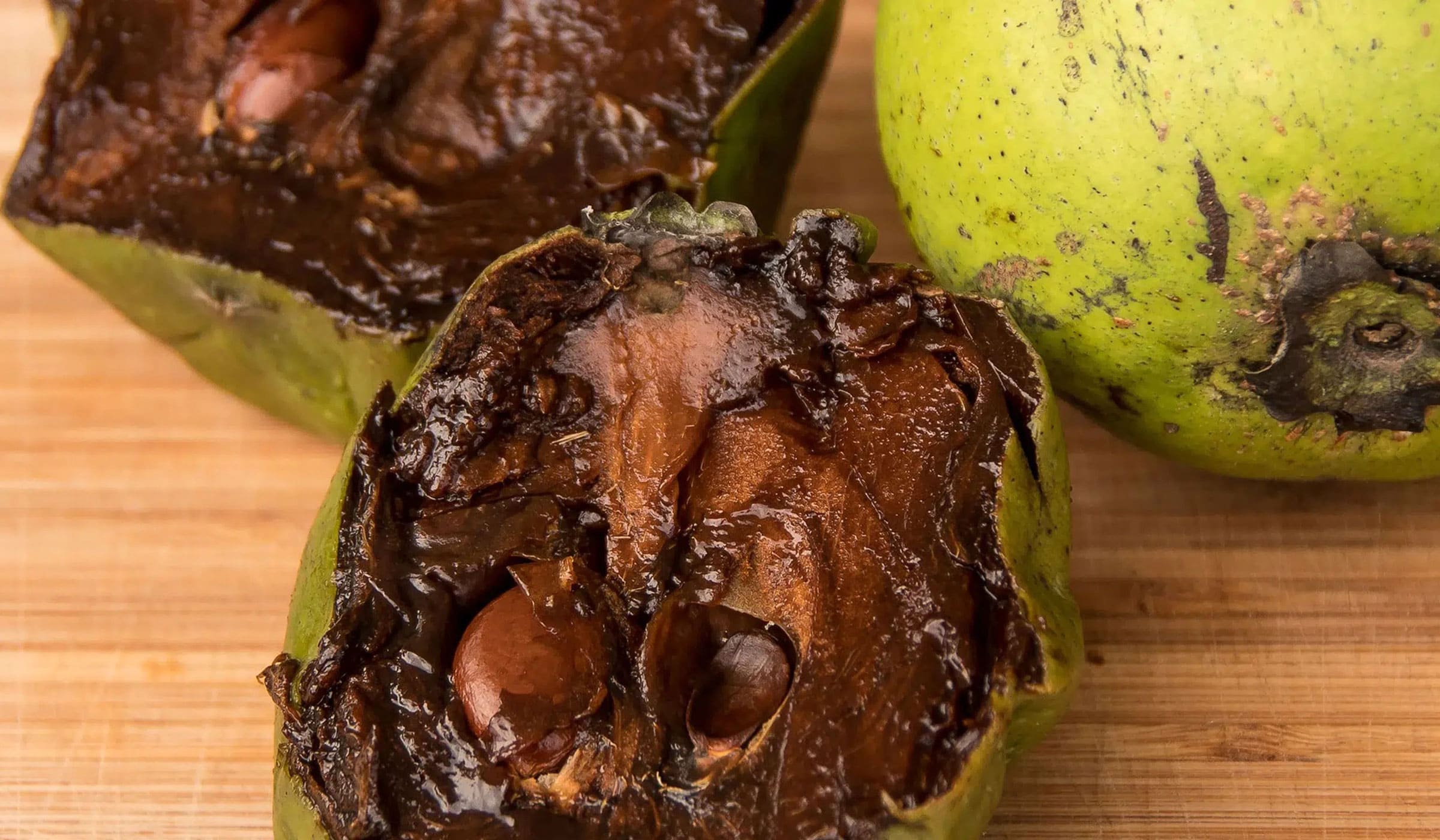
The fruit is oval, slightly rounded, and flattened. Its thin, shiny green skin turns olive green when ripe. It contains up to 12 flat, brown seeds. The generous, sweet pulp may be off-putting because of its chocolate-brown color. It is sometimes called “caca poule.”
Medicinal properties
Black sapote, rich in vitamin C, has the same benefits as oranges, making it a reliable source of energy. One hundred grams of black sapote provide 25% of the recommended daily intake of vitamin C.
It is also a good source of vitamin A. Its Potassium helps build muscles, regulate the heart’s electrical activity, and support normal cell function.
It aids digestion and helps transport oxygen throughout the body.
Uses
The pulp of the black sapote is eaten raw with a squeeze of lemon. It can also be used to make many sweet desserts (creams, ice creams, pies, cakes), drinks, and liqueurs. It is said to taste like chocolate pudding, without the calories.